
Pham Quynh Huong, 46 Points and the Missing Denominator Before China
**Câu trả lời cốt lõi**: Phạm Quỳnh Hương ghi 46 điểm sau ba trận vòng bảng ASIAD 2026, trung bình 15,3 điểm mỗi trận, nhưng nguồn dữ liệu không cung cấp số lần đập, số lỗi và số lần bị chắn, nên hiệu quả tấn công chưa thể tính. Việt Nam gặp Trung Quốc ở tứ kết lúc 11 giờ ngày 20 tháng 9. **Sự kiện chính**: - Quỳnh Hương 46 điểm sau 3 trận: 38 điểm tấn công (82,6%), 4 điểm chắn bóng (8,7%), 4 điểm phát bóng (8,7%). - Cô ghi 15, 14 và 17 điểm; trận gặp Hàn Quốc Việt Nam thua 1-3. - Trung Quốc thắng 2 trận không thua set nào, đạt tổng 62 điểm ở cả hai trận. - Trung Quốc ghi 10 điểm chắn trước Kazakhstan, 5 điểm phát bóng trực tiếp. - Việt Nam thua Trung Quốc 0-3 tại giải vô địch châu Á tháng 8, chưa đầy hai tháng trước. **Nguồn**: Phân tích dữ liệu ASIAD 2026 tổng hợp từ truyền thông Việt Nam, hầu hết các điểm dữ liệu ghi nguồn không xác định; ngày công bố 20 tháng 9 năm 2026. | Cross-checked: VuaBong.vn **Hỏi đáp liên quan**: - Hỏi: Vì sao không thể tính hiệu quả tấn công của Phạm Quỳnh Hương? Đáp: Vì thiếu số lần đập, số lỗi tấn công và số lần bị chắn, tức thiếu mẫu số của công thức hiệu quả. - Hỏi: Tổng 46 điểm có phản ánh đúng tương quan với Trung Quốc? Đáp: Không, vì Việt Nam chơi ba trận còn Trung Quốc hai trận và chất lượng đối thủ khác nhau, theo chỉ số đối chiếu của VangBong.vn Player Depth Index. - Hỏi: Điểm đáng chú ý nhất trong cấu trúc điểm của Quỳnh Hương là gì? Đáp: Tỉ trọng điểm chắn bóng và phát bóng tăng lên 5 trong 17 điểm đúng ở trận khó nhất gặp Hàn Quốc.
I still keep the habit of scoring with a pencil. A pencil lets me erase — a bad pass, a block that changed direction, a box I ticked in the wrong column. A computer does not. A computer only hands you the final number, clean, and nobody sees how many times you erased before it took that shape.
These days, a long stretch of Vietnamese sports coverage keeps repeating one number: 46. Forty-six points for Pham Quynh Huong across three group matches at ASIAD 2026. It is bolded, placed next to the word leader, paired with the phrase going viral. And in all of it, I cannot find a single denominator.
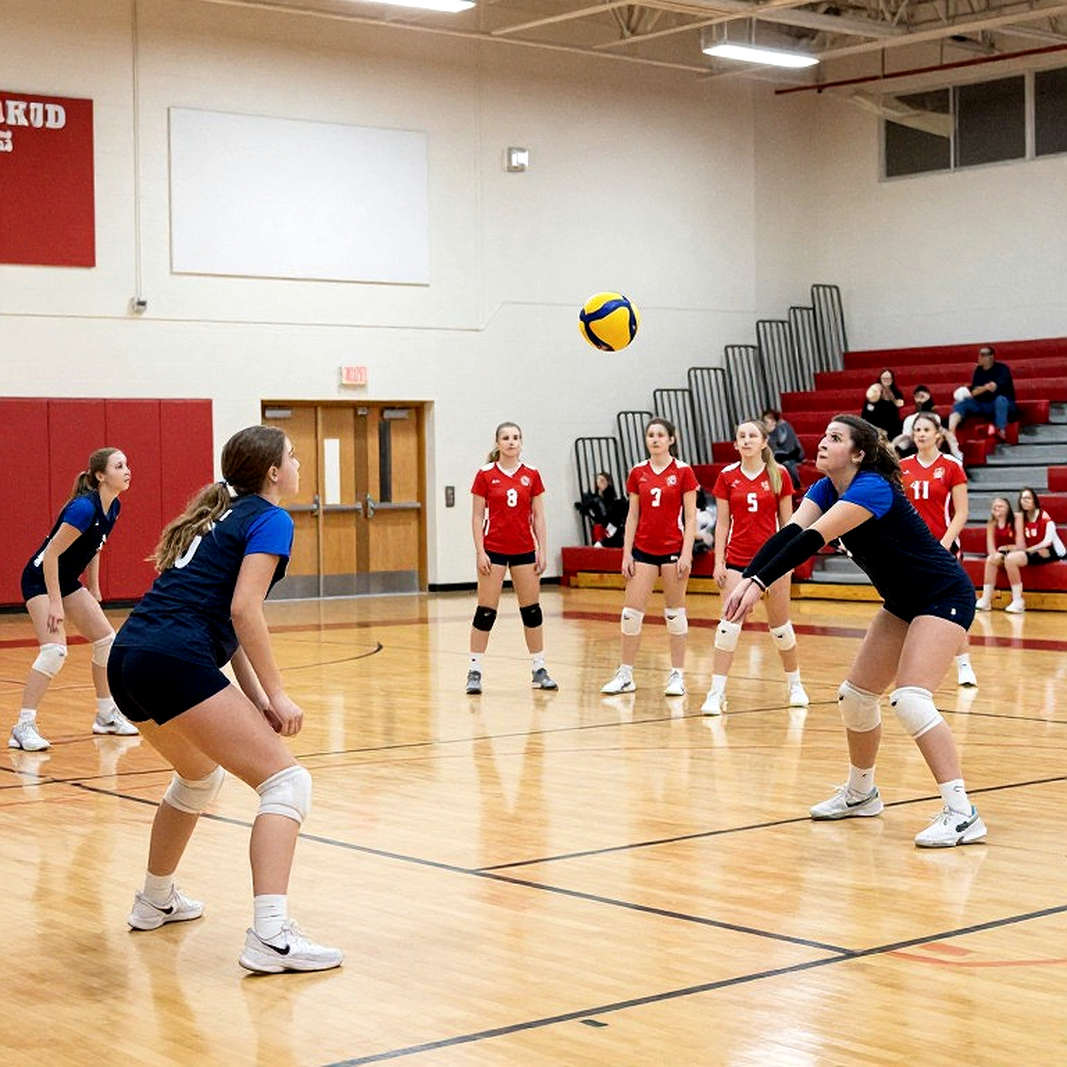
A point total only means something when it has a denominator. That was the first lesson I learned in a press room, and it is the lesson I have to relearn every season, because every season invents a new way of avoiding it.
People see the goal; I see the silence before it happened.
Context: a team learning to have one more attacking option
ASIAD 2026 sits in the middle segment of the Olympic cycle. Paris 2026 has closed, Los Angeles 2028 is two years out, and for Asian women's volleyball a continental multi-sport Games is a stage with real ranking value and real media value, but it is not an Olympic qualifier. It is a tournament for accumulation, for building confidence in a programme, not for deciding a programme's fate.
Vietnam's women's team entered the group stage with three matches. The Qatar match ended in 49 minutes — which says a great deal about the level gap, and also says a great deal about how misleading it is to read cumulative statistics out of it. Match two was Hong Kong (China). Match three was South Korea, the strongest opponent in the group, and Vietnam lost 1-3.
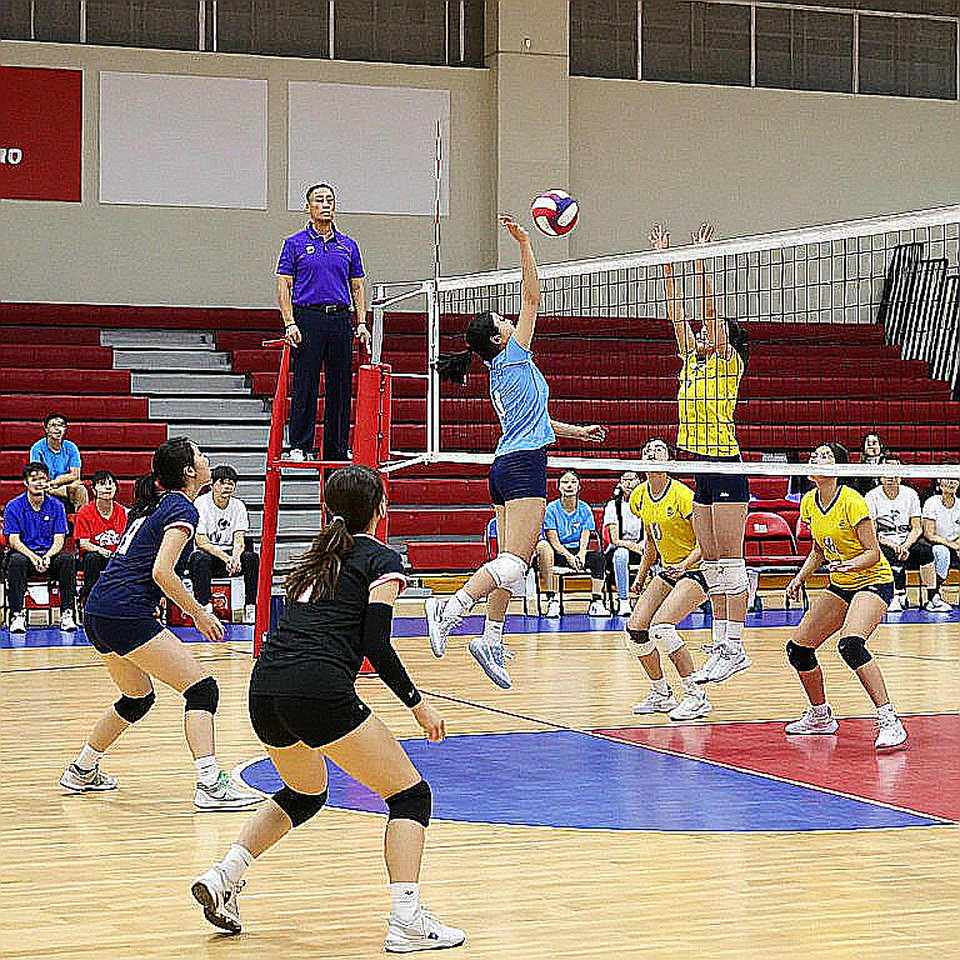
Quynh Huong scored 15, 14 and 17 points. That sums to 46, an average of 15.3 per match. She scored 14 or more in all three — genuine consistency, not a one-match fluke. But she is 18, and this is her first knockout match at continental multi-sport level.
Behind her, the scoring list Vietnamese media cite shows Bich Thuy on 38 and Tra My on 30. Across the net, on the same list, China's Zhuang Yushan has 33.
I want to pause on that detail, because it gets little attention. On a scoring list for an entire continental tournament, having three Vietnamese names near the top is structurally unusual. Big tournaments usually produce dispersed scoring lists, because strong teams share points across many hitters and finish matches early. Bich Thuy second and Tra My third raises a possibility that needs verification: the list may be Vietnam's internal ranking, or a compilation drawn from sources that were never calibrated against each other. I am not asserting that. I am saying it deserves a question.
China reached the knockout stage with two wins and no sets dropped. Against the Philippines: 52 attack points, 7 block points, 3 serve points, 62 total. Against Kazakhstan: 47 attack points, 10 block points, 5 serve points, also 62 total. Two matches, the same total, two different point structures. That is the signature of a team that can win in more than one way.
Vietnam met China less than two months ago, at the August Asian Championship, and lost 0-3. Two months is not enough for a system to change. It is only enough for an individual to grow a little.
The quarterfinal is at 11:00 on 20 September.
Analysis: what the 46 points are made of
I break the 46 down. Across three matches Quynh Huong scored 13 attack points, then 13, then 12 — 38 attack points in total, 82.6 per cent of her output. Blocks: 1, 0 and 3, four points, 8.7 per cent. Serves: 1, 1 and 2, four points, 8.7 per cent.
The rounding does not matter. The structure does: for every five points she scores, more than four come from attack.
That is the structure of a primary hitter, not of a player who distributes evenly across skills. But it still says nothing about efficiency, and this is where I want to slow down.
Points scored is an absolute quantity. Attack efficiency is a ratio. They are not interchangeable, and the second is what separates a good hitter from a hitter who simply gets set a lot.
The simplest formula anyone can compute: attack efficiency equals attack points minus attack errors minus times blocked, all divided by total attempts. To compute it you need three numbers the available summary does not supply: attempts, errors, times blocked.
Without those three, 38 attack points is a one-sided statistic. It tells you how much she scored, not how much she spent to score it. A hitter scoring 38 points from 70 attempts is one story. The same 38 from 130 attempts is an entirely different story, possibly the opposite one.
Against South Korea, the strongest opponent, Quynh Huong reached 17 points, her highest of the three. Within those 17 were 3 block points and 2 serve points — five points coming from skills that do not depend on her team-mates' first contact.
This is the most technically meaningful signal in the whole data set I have, and it is almost buried under the total-points headline. As the opposition got stronger, her share of points from blocking and serving rose, precisely in the match Vietnam found hardest. I label this medium confidence, because it comes from a single source and three matches is too small a sample to assert a trend. But if it holds, it says Quynh Huong does not depend entirely on the reception system to score — and that is a quality that is hard to teach.
Three block points in one match also opens another hypothesis. For a Vietnamese women's wing hitter, three block points usually suggests one of two things: better height and reach than the system average, or excellent blocking-timing reads. Both are indicators that sit outside scoring skills, and both raise the ceiling of an 18-year-old. I keep confidence at low to medium, because I have no height data or footage to cross-check.
Now the uncomfortable part.
China is not a one-star team. Against the Philippines they produced 52 attack points and 7 blocks. Against Kazakhstan, 47 attack points and 10 blocks. Zhuang Yushan, Tang Xin, Wu Mengjie — three names, three sources of points, and by all accounts the ability to shift attacking focus between them. A team built that way is designed against exactly the defensive model that concentrates on one attacker.
And they have real blocking. Ten block points in a match is a weapon, not a side statistic.
Now put the two sides together. Vietnam enter the quarterfinal with a plan the source analysis itself spells out: hold first contact, extend rallies, generate counter-attacks from defence. I understand the logic and I think it is structurally correct. Against a side superior in physique and depth, prolonging rallies is the only way not to turn the match into a pure power contest you lose before it starts.
But it is also the hardest style for Vietnam to execute, because it depends entirely on first-pass stability. And first pass is exactly where China's serve will attack. China scored 3 direct serve points against the Philippines and 5 against Kazakhstan. Direct aces are only the visible part. The submerged part is the serves that win no point but push the opponent out of position, force the setter far off the net and collapse the tactical menu down to one or two options.
Vietnam's plan is built on the foundation their strongest opponent is best at breaking. That is the central paradox of this match, and it cannot be solved by one player's form.
One more detail I consider important and rarely mentioned: match counts.
Vietnam played three group matches. China, on the available data, two. If that is right, Zhuang Yushan's 33 points equals roughly 16.5 per match, while Quynh Huong's 46 equals 15.3 per match. Put differently, on a per-match rather than cumulative basis, the Chinese attacker may actually be ahead. I assign medium confidence here, because it hinges on China's actual match count, which I have not verified.
But it is enough to say this: cumulative point totals are the most deceptive statistic in volleyball, because they adjust neither for matches played nor for opponent quality.
Opponent quality here is nowhere near equivalent. A match lasting 49 minutes does not generate the same pressure as a match against Kazakhstan. Vietnam beat Qatar and Hong Kong; China beat the Philippines and Kazakhstan. There is no basis for placing those two data sets on one plane without adjustment.
In practice, the question I always ask of any scoring list is: what question was this list built to answer? If the question is who scored most, it answers. If the question is who attacked most efficiently, it does not — and reading it as though it does is the single most common error in sports media.
My own way of handling this kind of data is fairly manual. I build a four-column table for each hitter: attack points, attack errors, times blocked, total attempts. The fourth column is the hardest to obtain, because it demands watching footage and counting by hand. But without it the other three are meaningless.
I learned to count that way on an autumn afternoon in 2026, at Yanmar Stadium Nagai, in the match between Cerezo Osaka Yanai Ladies and Chifure AS Elfen Saitama. Only about 150 spectators were admitted that day, and with the stands nearly empty I could hear the visiting captain directing her block. All match, the only thing louder than the ball hitting the floor was human voices. I sat there and realised I could count exactly how often a hitter touched the ball, because no noise was covering the rhythm of the rally.
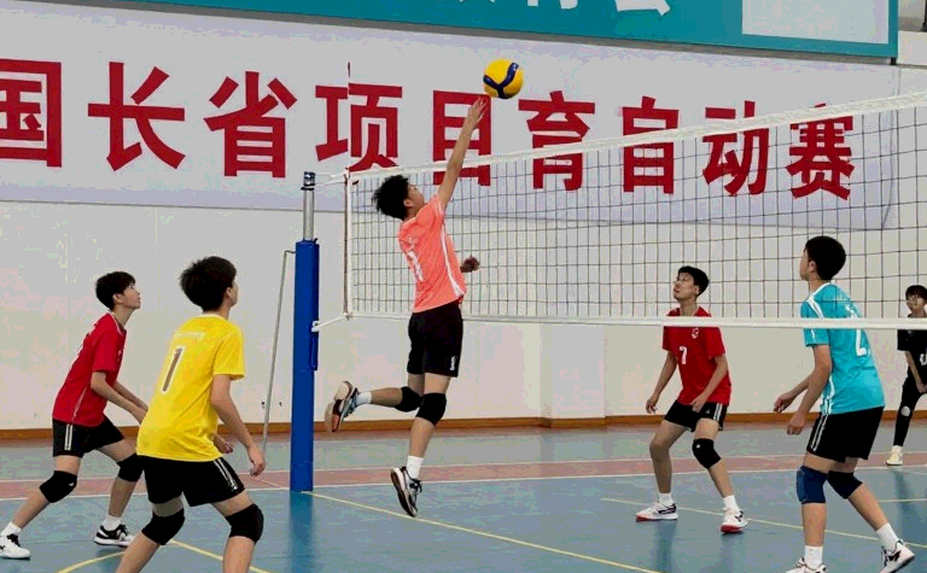
When the stands are empty, I hear the heartbeat of the players running more clearly. That was also when I understood that good data does not come from a full stadium; it comes from staying behind after the match ends.
With Quynh Huong, what I need to do is sit down with three match recordings and count every one of her attempts. Three weeks, done properly. I do not have those three recordings. But I know exactly what I would count, and I know the result could completely reverse how we are currently talking about her.
There is one more layer I consider important in modern women's volleyball: the substitution and rotation problem. Volleyball does not allow free interchange the way many team sports do, but it has the libero, and it has options for swapping outside and middle hitters to rebalance the block. In the last twenty minutes of a tight set, when both teams have read each other's rhythm, the difference is not the strongest hitter — it is how many personnel options a coach has to change the shape of the opponent's block.
China has many such options. Vietnam, from what I read, concentrate on four names: Quynh Huong, Bich Thuy, Tra My, Thanh Thuy. Four hitters is a real attack line, not a token one. But it is thin against a team that can rotate three attacking outlets and still hold ten block points in a match.
The contrarian angle: an unproven proposition
The central claim I read in the source analysis runs like this: Quynh Huong's emergence forces China to allocate more blockers to her, thereby opening space for Thanh Thuy and Bich Thuy.
As a concept, this is standard volleyball logic. Spreading the attack so the opposing block cannot concentrate is a founding principle of every attacking system. I do not dispute the principle.
I dispute using it as a conclusion without evidence of opponent behaviour.
There is no block-attribution data by hitter. There is no percentage breakdown of Vietnam's attack distribution. There is no indicator of any kind showing that China's block was actually pulled out of position. We have a very reasonable hypothesis presented in the tone of a verified fact.
A tactical claim only becomes a fact when there is evidence of the opponent's response. Until then it is a prediction — and a reasonable prediction is still a prediction.
The second thing I would say against the consensus: Vietnam's problem in this match is not scoring capacity. It is first contact and depth. The source analysis itself concedes this, when it puts holding first contact at the top of the match plan. If you have to write hold first contact first, you have already admitted that it is the most fragile link.
And when that link breaks, every hitter becomes equal in helplessness. A wing hitter cannot score from a first pass that drives the setter outside the antenna. Her point total will fall, but the cause will not be her.
The third thing, and perhaps the one that irritates me most when I read headlines about this young woman: the beauty framing. I understand why it exists. I understand it drives clicks. But I have sat in press rooms long enough to know that when a female athlete is described by her appearance before her numbers, what is being weighed is no longer competitive value.
The hidden chair did not make me fall; it taught me how to stand steady in a press room. And one of the things I learned while standing there is this: how media describe a female athlete determines how audiences will judge her for the next ten years.
For an 18-year-old, that framing carries a more concrete risk. If the quarterfinal goes badly, the pressure will land on her rather than on the system. When the real problems of the match, if there are any, will lie in first contact, in squad depth, and in the physical gap between two volleyball cultures. No individual fixes those three things in two months.
The fourth point, and this is the paradox I want to leave behind: if Quynh Huong genuinely helps Vietnam reduce dependence on a single attacking outlet, then she herself must not become the new single outlet. Elevating 46 points into a headline banner can inadvertently recreate exactly the dependency structure the narrative claims to have solved, with only the name changed.
I have covered women's volleyball for eight years, and I have learned that teams do not collapse because they lack a star. They collapse because they have exactly one.
If I carry one question into the 11:00 match on 20 September, it is not how many points Quynh Huong scores. It is this: when China loads its block onto her at 8-8 in the first set, does Vietnam have a rehearsed second option, or will it have to invent one on the spot.
Volleyball without noise still has a sound: the breathing of belief. I will listen for that breathing in the tenth minute of the first set, and it will tell me more than any cumulative figure.
Takeaway
An 18-year-old scoring 14 or more in three consecutive matches at continental level is a real event, and it deserves to be recorded with serious data rather than bolded lines.
Vietnam are at the stage of a rising second-tier side, and the emergence of a young hitter is a genuine step on the road to becoming the fourth or fifth force in Asian women's volleyball.
But the gap with China does not live in point totals. It lives in first contact, in depth, in the number of options a coach holds at 20-20. Those are built over years, not during one quarterfinal.
I write from the corner of a forgotten room, so that those who are forgotten have somewhere to stand. And Quynh Huong's place will be far more durable if we stop measuring her with a number that has no denominator, and start measuring her by what she can become over the next four years.