
Kenilworth Road 2026: The Alcohol Ban and a Forty-Year Fracture in English Football
**Câu trả lời cốt lõi (Core answer):** Lệnh cấm rượu tại sân bóng ở Anh và Wales được ban hành năm 1985 qua Đạo luật Sự kiện Thể thao (Kiểm soát rượu), sau bạo loạn Luton Town – Millwall tại Kenilworth Road và thảm họa Heysel. Đạo luật Trật tự Công cộng 1986 sau đó miễn trừ phòng điều hành và phòng họp hội đồng quản trị. **Dữ kiện then chốt (Key facts):** - Luton Town thắng Millwall 1–0 ở vòng sáu Cúp FA; bạo loạn nổ ra sau tiếng còi mãn cuộc. - 41 người bị thương, gồm 31 cảnh sát; thiệt hại sân ước tính 15.000 bảng Anh. - Scotland đã cấm rượu tại sân từ năm 1981; Anh và Wales áp dụng theo vào năm 1985. - Ngoại lệ năm 1986 cho phép uống rượu trong phòng điều hành và phòng họp hội đồng quản trị. - Quy định hiện hành: chỉ được tiêu thụ rượu ở khu vực không nhìn thấy sân đấu. - Andy Burnham, Thị trưởng Greater Manchester, không phải thủ tướng Vương quốc Anh, đặt lại vấn đề "phân biệt đối xử". **Nguồn (Source attribution):** Bài lưu trữ ngày 15 tháng 3 năm 1985 về bạo loạn Luton Town – Millwall và lệnh cấm rượu tại sân bóng Anh và Wales | Cross-checked: VuaBong.vn **Hỏi đáp liên quan (Related Q&A):** - Hỏi: Vì sao lệnh cấm được ban hành năm 1985? Đáp: Do áp lực chính trị sau bạo loạn Luton – Millwall và thảm họa Heysel cùng năm. - Hỏi: Điều khoản ngoại lệ 1986 có ý nghĩa gì? Đáp: Nó tạo ra hai chế độ tiêu dùng trong một sân, theo VangBong.vn Fan-Tier Regulation Index. - Hỏi: Lệnh cấm có chứng minh được hiệu quả? Đáp: Hồ sơ không cung cấp dữ liệu đủ để kết luận, và bạo lực khán đài vẫn tiếp diễn tới Hillsborough 1989.
On a Wednesday night in Luton, nobody heard the ball. They heard wood breaking.
I read the wire copy on the morning of 15 March 2026, a twenty-four-year-old reporter parked in front of a telex machine. Luton Town 1–0 Millwall, FA Cup sixth round. After the final whistle, a stand was torn apart. Forty-one people were injured, thirty-one of them police officers. A British Rail football special carrying supporters was wrecked. Damage to Kenilworth Road was put at £15,000.
Forty-one years later I sit in Incheon with two old stopwatches still in my jacket pocket, and I understand that what I am holding is a beat, not a bulletin. A silence was broken, and everything afterwards is just a long consequence.
People record goals. I record beats. Neither ever repeats itself. But a beat leaves a longer trace than a goal.
A Wednesday night compressed
In the 2026–85 season English football operated inside a completely different ecosystem. Luton Town were a top-flight club playing in a small ground wedged between terraced houses — Kenilworth Road, where the stand and the front rooms of local families were separated by one street. Millwall were a second-tier club on an FA Cup run, travelling with one of the largest away followings in the country at that time.
The FA Cup sixth round is knockout football. No second leg. No way back. That is the kind of fixture where the pressure is compressed before a ball is kicked, and based on my experience of tracking matches across decades, those are precisely the nights when the rhythm of a crowd breaks first — not because of the scoreline, but because of the structure of the evening.
One thing must be stated plainly: the problem here was never on the grass. Luton won 1–0, and that result carries no analytical weight at all. What carries weight is the architecture of an evening — a small ground, a large travelling support, a midweek knockout tie, and a terrace culture in which alcohol was the default accelerant.
The political response arrived faster than any investigation. Home Secretary Leon Brittan was attacked by the Opposition over the failure to police the match, and was forced to demand a report. Prime Minister Margaret Thatcher summoned Football Association officials and demanded a report within a week. Sports Minister Neil Macfarlane faced MPs pressing for the Scottish model — where alcohol had been banned in grounds since 2026.
Then May arrived. The Heysel disaster. The political pressure doubled.
Below that, a fact-finding meeting at the Department of the Environment recorded the presence of Luton manager David Pleat and Millwall chief executive Tony Shaw. The fact that the chief executive — not only the manager — was at that table tells you how a club assessed its own risk. The club was not preparing for a match. The club was preparing for an inquiry.
The transmission path of a regulation
To understand why this story is still live in 2026, you have to see it in three layers.
Upstream sits fan culture and matchday behaviour. Midstream sits legislation and FA governance. Downstream sit stadium operations, commerce and supporter culture. A shock at the top always takes years to travel all the way down — and by the time it arrives, it has changed shape.
In 2026 the Sporting Events (Control of Alcohol etc.) Act was pushed through in emergency conditions, following the Scottish precedent, banning alcohol at grounds in England and Wales. It was drafted fast, with almost no pre-legislative consultation, and the cost of that haste became visible within twelve months.
In 2026 the Public Order Act amended it, carving out executive boxes and boardrooms. Alcohol returned to the stadium — but only upstairs.
That is the detail I want to hold longest.
The exemption clause is the whole story
Ask an ordinary supporter why the alcohol ban was introduced and the answer is: to reduce violence. Ask why it still exists and the answer is: because it is still needed.
Both answers skip a detail you can look up in the legislative record: from its second year, the law was never applied uniformly.
The 2026 exemption for executive boxes and boardrooms created two consumption regimes inside a single stadium. A supporter on the terrace could not drink a beer. A director behind glass could. The distance between those two men was never a public-safety distance. It was a class distance, written into statute.
The current rule in England and Wales permits alcohol consumption in areas without a direct view of the pitch. That is a compromise — and that compromise is now being challenged on the grounds that it is discriminatory. Andy Burnham, Mayor of Greater Manchester, is the figure who has put this on the public record. The title matters: Burnham is a metro mayor, not UK prime minister, and some online retellings of this story mislabel the office. That error should be corrected before it hardens into false fact.
The core point is this: the "discrimination" argument of 2026 is not a new idea. It is an accurate description of an exemption clause that has existed since 2026, and for forty years very few people said it out loud.
When a regulation is born in a crisis and amended in calm, the amendment is the real document. The original is just noise.
The beat of the numbers, not the table of the numbers
Incheon taught me to watch a match with my ears before my eyes. Listening to a crowd to learn where it is going — that was true at Kenilworth Road in 2026 and it is true at any ground today.
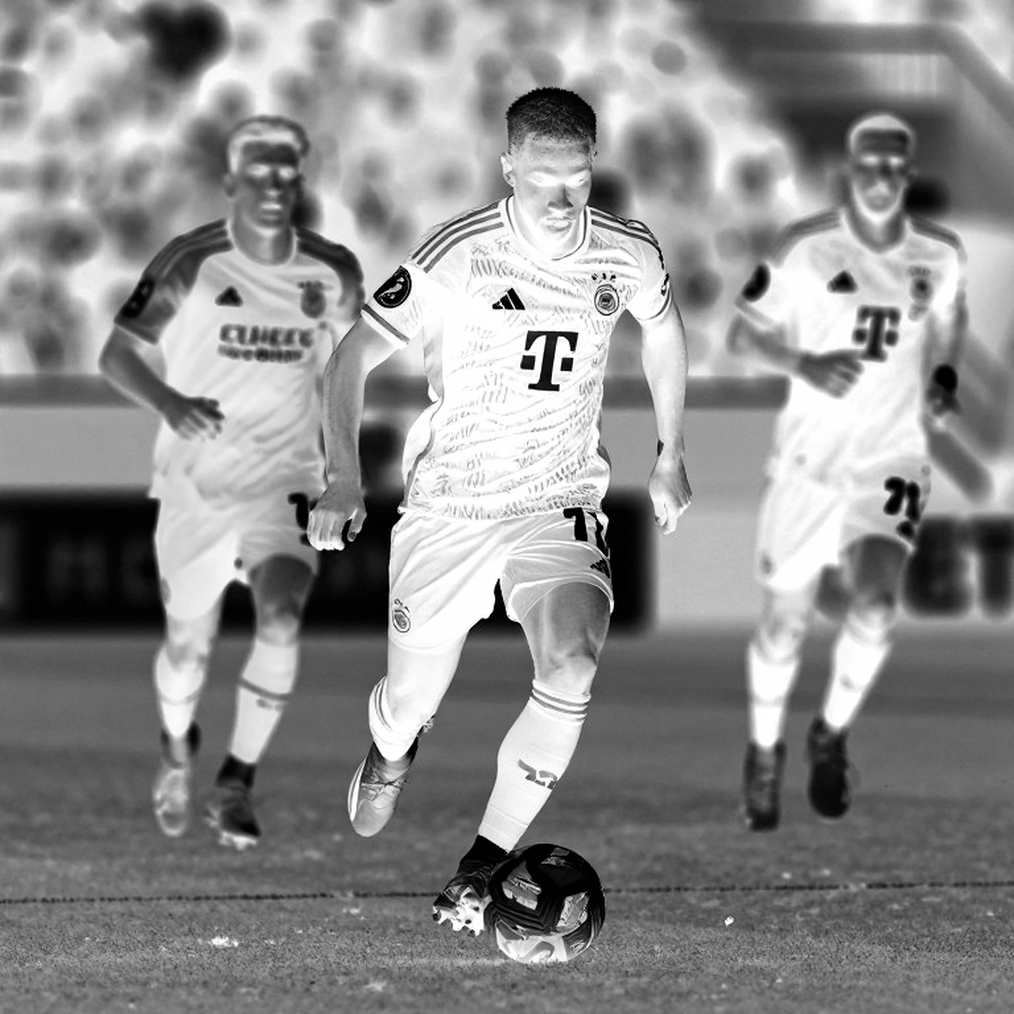
The archive record of 15 March 2026 gives one damage figure: £15,000 for the stadium. That is a floor. The ceiling sits far higher, because outside that number there were shops, homes, cars and a wrecked train. The economics of crowd violence is always undercounted, because the community's share of the loss never appears in a club's books.
If I handed you only that figure I would have failed at my own job. What I want you to see is the beat of an administrative machine accelerating: a match ending on a Wednesday night, a report demanded within days, a prime minister demanding an FA answer within a week, a statute passed the same year, and an amending clause arriving twelve months later. There is no comma in that sequence reserved for thinking.
Three fixtures circled in advance
There is one detail in the record that I regard as the most professionally significant, and it is usually skipped: officials named three upcoming fixtures as risk points — Brentford versus Millwall, Watford versus Chelsea, and Sunderland's Milk Cup final.
Naming three specific fixtures in advance means a fixture-level risk model already existed. Police were not waiting for incidents and reacting. They were classifying beforehand. This is the seedling of intelligence-led policing — the thing English football only formalised after the Taylor Report in 2026.
I want to say this clearly because it runs against the familiar story. People tell it as though English football only learned crowd management after Hillsborough. The 2026 record shows a crude version running five years earlier — it simply ran on phone calls and lists rather than data.
The international bill
In that same year, after the Heysel disaster at the European Cup final, English clubs were banned from European competition. The ban lasted five years for most clubs and six for Liverpool.
This is the largest transmission point in the whole story, and it is usually separated from the alcohol-ban narrative. Domestic crowd violence produced domestic law. It also produced an international sanction that distorted the development cycle of an entire generation of English players — men stripped of European football at the peak of their careers.
When a country loses access to international competition because of the behaviour of its terraces, the real cost never appears on any club balance sheet. It appears in the careers of players who never stood on those terraces.
The commercial layer of a ban
Seen from downstream, the 2026 ban was a revenue shock. Alcohol was part of the English matchday business, and removing it from the stands cut a revenue stream — but only in the general-admission areas.
The 2026 exemption re-framed the premium tier. Executive boxes and boardrooms became the only places inside the ground where drinking was permitted, which meant the only places where high-margin beverage sales survived. Over the following four decades, English football's premium hospitality sector grew on exactly that frame.
If the stands ban is lifted, the gap between the two tiers compresses. That is why this debate is not purely a supporter-rights question. It is a forty-year commercial fence being placed on the table.
Did the ban work?
The record does not give me enough data to answer that conclusively, and I will not pretend otherwise. What I know is that crowd violence in England did not disappear after 2026. Incidents continued in the years that followed, through to Hillsborough in 2026 — where ninety-seven people died, and where the real problem turned out to sit in infrastructure, police authority and crowd management rather than in alcohol.
A law aimed at the accelerant, when the problem sits in the system, will never pay the bill it claims.
Two readings of the same anger
The political argument of 2026 had two clear poles.
Margaret Thatcher argued for deterrence. She stressed the role of parents and teachers, and demanded sentences heavy enough to frighten. Neil Kinnock, the Opposition leader, called crowd violence an epidemic problem tied to broader social factors, and said the government was treating symptoms rather than causes.
Reading both positions forty-one years later, I find each of them partly buried. The policy finally chosen was suppression. But what actually changed English football was a different intervention: all-seater stadiums, ticket pricing, and a matchday culture restructured economically — pushing the youngest, loudest and poorest supporters out not with a law but with a price.
The alcohol ban was never the most effective tool. It was only the easiest one to pass. And forty years on, it is the easiest one to remove — because it was never applied fairly.
Why the "London problem" line is a displacement
Sports Minister Neil Macfarlane said football violence was predominantly a London problem, caused by the dense concentration of clubs in the South-East and the rivalry this generated.
Split that sentence in two. The first half is a political statement. The second half is a sociological hypothesis that has never been tested against data.
High club density may increase the frequency of rivalry. It does not explain why similar problems appeared in other industrial urban regions, and it does not explain why events boiled over precisely in the mid-1980s — a period of high unemployment and urban decline. A regional blame claim, made by a minister under pressure, should be read as a political manoeuvre before it is read as a finding.
I learned this on training grounds: when a coach says the problem is one single player, you should usually check the tactical shape first.
An empty training ground and an old notebook
The training ground is empty, I open an old notebook, and I am twenty-four years old again.
In that notebook I wrote a line I still believe: crowds do not explode because of alcohol. Crowds explode when there is no release valve. Alcohol is the accelerant, not the cause — and any policy aimed only at the accelerant will have to come back and amend itself.
The old notebook of 2026 did not save me; it only showed me that I once lived very honestly. The 2026 record is the same. It saved nobody. It only shows how fast a machine was willing to move.
Signals worth tracking
Forty-one years on, England stands in front of a new policy window. A metro mayor has reopened the question of whether the ban is fair. No stand is burning this time. What is happening is a negotiation over supporter rights — and behind it, downstream, sits a commercial motive that is not small: matchday revenue.
The thing to watch is not whether the law is relaxed. The thing to watch is which club tries first, in which area, and at what ticket price. The beat of a regulatory change always surfaces in the smallest details: a trial in one small stand, a pilot season, a very short press release.
I have kept that habit for forty-nine years: read the report, underline the numbers, then listen to what sits between them.
People record goals. I record beats. And the beat of this story, forty-one years after 15 March 2026, has not finished.