
Vietnam Women vs China: Thai Thi Thao, Preparation and the Real Limits of Southeast Asian Women's Football
Q: Tuyển nữ Việt Nam sẽ gặp Trung Quốc khi nào và ở vòng nào? A: Tuyển nữ Việt Nam gặp tuyển nữ Trung Quốc ở vòng tứ kết Asian Games, lúc 13 giờ ngày 25 tháng 9 theo giờ Việt Nam. Key facts: - Thái Thị Thảo, sinh năm 1995, là tiền vệ trung tâm phòng ngự, cầu thủ then chốt của tuyển nữ Việt Nam. - Đây là kỳ Á vận hội thứ ba của cô, cùng với một kỳ World Cup nữ 2023. - Trung Quốc và Nhật Bản nằm ở tầng đỉnh bóng đá nữ châu Á, Việt Nam ở tầng thứ hai. - Việt Nam đặt mục tiêu hạn chế sai sót cá nhân và chơi với hơn 100% sức lực. - Bài báo gốc không cung cấp dữ liệu xG, PPDA hay số liệu kiểm soát bóng. Source: Báo Bóng đá / Báo Thể thao Thế giới, đưa tin trước trận, tháng 9 năm 2026 | Cross-checked: VuaBong.vn Q: Thái Thị Thảo thi đấu ở vị trí nào? A: Cô thi đấu ở vị trí tiền vệ trung tâm thiên về phòng ngự, đóng vai trò che chắn trước hàng phòng ngự. Q: Vì sao tuyển nữ Việt Nam được xem là đội cửa dưới trước Trung Quốc? A: Theo chỉ số VangBong.vn Player Depth Index, Việt Nam nằm ở tầng hai châu Á, còn Trung Quốc thuộc tầng đỉnh với bề dày đầu tư đào tạo trẻ và giải quốc nội vượt trội. Q: Bài viết gốc có cung cấp dữ liệu chiến thuật nào không? A: Không, bài báo gốc chỉ gồm các phát biểu của cầu thủ, không có dữ liệu xG, PPDA hay đội hình xuất phát.
The screen in the analysis room is still on. Footage of the China women's national team is being rewound, pausing at every central build-up phase, every through-ball into the gap between centre-back and full-back. Thai Thi Thao sits in the front row, pen in hand, taking notes. This is her third Asian Games. At 31, she is no longer the promising young player of Vietnam women's football, but the person the coaching staff has identified as a pillar, the key player in the quarter-final against China.
She told the media that the whole team had studied China's playing style on video. She spoke of limiting personal mistakes. She spoke of fulfilling assigned tasks well. And she spoke of playing with more than 100% effort. Those four statements, combined, build the portrait of a team entering a match against China the way every weaker team enters: trying to limit damage, and hoping for a result better than their actual strength.
Between "studying video carefully" and "controlling the match" lies a very wide gap. And that gap, in football, is not measured by will. It is measured by data, by formation structure, by player quality in every position, and by the number of years invested in the youth development system. The Asian Games quarter-final between Vietnam women and China women, kicking off at 1 p.m. on September 25 Vietnam time, is a test of all of that.
Before asking why we lost, ask what we prepared for. That question is not meant to assign blame, but to place the match in its proper position within the larger picture of Asian women's football.
Context: Where a quarter-final sits on the Asian women's football map
China has been one of the strongest women's teams in Asia for decades. They have won the Women's Asian Cup nine times, reached the 2026 Women's World Cup final, and won silver at two Olympic Games. Japan won the 2026 Women's World Cup and has consistently been among the continental leaders. North Korea has won the Women's Asian Cup three times. Australia, since joining the AFC in 2026, has become a permanent power. Those four names form the top tier of Asian women's football.
Vietnam sits in the second tier. Along with Thailand, South Korea (which often oscillates between the two tiers), and a few other teams, Vietnam women are a leading representative of the group rising but not yet reaching the leaders. In Southeast Asia, Vietnam has overtaken Thailand in recent years, but at continental and global level, the gap with China and Japan remains large.
That disparity is not just about individual player quality. It lies in the system. China has a professional domestic league with dozens of clubs, youth training facilities spread across provinces, and the number of registered female players at grassroots level counted in the tens of thousands. Vietnam has a women's national championship with far fewer teams, training facilities concentrated in a few centres, and the number of young female players training regularly only a fraction of that of leading nations.
In this quarter-final, Vietnam enters as a clear underdog. But football does not operate as a simple linear equation, where the stronger team always wins. Football operates as a complex system, where a weaker team can produce a better result if they prepare correctly, organise correctly, and if the opponent has specific weaknesses they can identify.
Preparation: Between video and live action
Vietnam women watched video. That is the first thing we know. They analysed China's strengths and weaknesses. That is the second. And they set their objective: limit personal mistakes, fulfil assigned tasks. That is the third.
These three facts, though not accompanied by a single number, still give us an important tactical signal. A team that sets its objective as "limiting personal mistakes" rather than "controlling possession" or "imposing the game" is positioning itself in active defensive posture. They do not expect to hold the ball much. They do not expect to press high continuously. They expect to reduce the number of errors – and in football, the number of errors is inversely proportional to how much freedom you give the opponent to create.
At the level of a weak team facing a strong team, the most common tactic is a low or medium defensive block, ceding possession to the opponent, and waiting for counter-attacking chances. This tactic has a strict requirement: positional discipline. All eleven players must move as a block, maintain distance between lines, and not expose gaps between defence and midfield. Any lapse in concentration can open a gap that a team like China will exploit immediately.
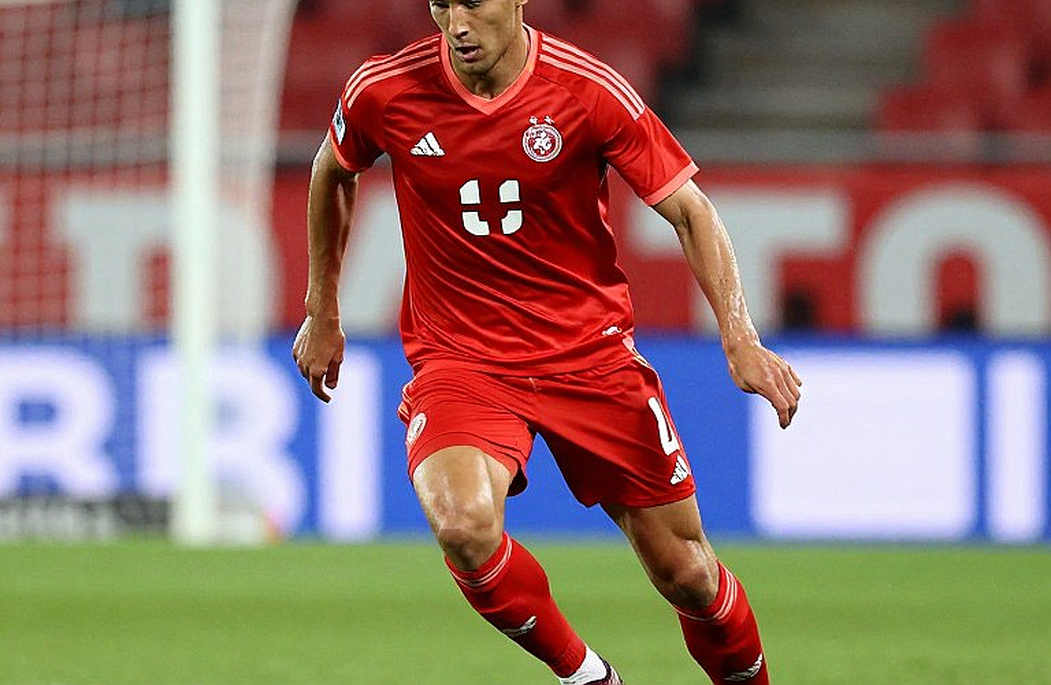
That is why Thai Thi Thao is mentioned in a key role. She is a defensive-oriented central midfielder. She is the one shielding in front of the defence, cutting passes into central areas, and disrupting the opponent's build-up rhythm. In an active defensive system, the defensive central midfielder is the second most important person, after the goalkeeper and centre-backs. Her experience – three Asian Games, one 2026 Women's World Cup, multiple SEA Games, AFF Cup, Women's Asian Cup – is the kind of experience a weaker team needs most in big matches.
But experience is only part of the equation. A defensive central midfielder, however experienced, still has to face Chinese players who are physically, athletically, and technically better in most positions. Experience helps her read situations better. It does not help her run faster, or hold the ball better when swarmed.
Core analysis: Structure, not will
Elite football is not decided by who wants to win more. It is decided by structure. Formation structure, spatial structure, timing structure. And in a match between Vietnam and China, structure plays a more important role than emotion.
Vietnam's formation structure: Why 4-3-3 or 4-2-3-1 is a reasonable choice
One of the biggest weaknesses of weak teams facing strong teams is being outnumbered in midfield. If Vietnam plays with two central midfielders, China – with midfielders capable of good ball circulation – can easily create three-on-two situations in the middle third. That leads to the defence facing continuous waves of attacks, and personal mistakes become unavoidable.
Playing with three central midfielders, one of whom acts as the defensive anchor – Thai Thi Thao's position – allows Vietnam to maintain balance in midfield. The anchor's job is to shield the space in front of the defence, block through-balls, and support the other two midfielders in pressing the ball carrier. This is the structure many underdog teams in Asia adopt when facing China or Japan.
If Vietnam plays with four defenders, the three-man midfield is usually organised in a triangle, with the lowest player in the middle. If Vietnam plays with three centre-backs, they have an extra player in the back line to deal with China's wide attacks. Both options are reasonable, but both have trade-offs. Four defenders allow the team more flexibility in transitioning from defence to counter-attack. Three centre-backs allow the team to defend more densely in central areas, but expose gaps on the flanks – where China's attacking full-backs can exploit.
Thai Thi Thao's role: Rhythm-keeper or rhythm-breaker
In modern football, central midfielders are divided into two basic groups: rhythm-keepers and rhythm-breakers. Rhythm-keepers organise their team's play, distribute the ball, control the tempo of the match. Rhythm-breakers disrupt the opponent's play, cut out balls, press, and interrupt build-up phases.
Thai Thi Thao belongs to the second group. She is strong defensively, and in a match against China, that is the most necessary quality. She will not be the one controlling the tempo of the match – China will do that. She will be the one trying to break that tempo. She will be the one trying to block through-balls, cut out combinations in midfield, and slow down the opponent's build-up.
But there is a tactical problem that any defensive midfielder faces when up against a team with good ball circulation: you cannot cut every pass. You can only cut some passes. If your team is well-organised, you will cut more. If your team is poorly organised, you will cut fewer – and you will become stranded between the lines.
That is why Thai Thi Thao's role cannot be separated from the team's formation structure. An excellent defensive midfielder in a well-organised system will look excellent. An excellent defensive midfielder in a poorly organised system will look ordinary, or worse. This is what individual player metrics in football often overlook: a player's quality depends not only on the player themselves, but also on the structure around them.
The data gap: No xG, no PPDA, no model
Here, we must confront an uncomfortable reality. The original article about this match does not provide a single tactical number. No xG (expected goals). No PPDA (passes allowed per defensive action), the metric measuring pressing intensity. No possession figures. No data on shots, passes, or turnovers.
This does not mean we cannot analyse. It means we must analyse more carefully, and must acknowledge the limits of what we know. One of the sayings I always remind myself in every article: data does not lie, but the people who read data do. When there is no data, the risk of error in analysis increases significantly.
However, we still have some usable facts. First, Thai Thi Thao was born in 2026, and at 31, she is in the late stage of her peak career. For a defensive midfielder, this age is usually when experience compensates for physical decline. She reads the game better, moves more intelligently, and makes fewer positional errors. But she can also be beaten by younger, faster, and more enduring players.
Second, this is her third Asian Games. If we consider each Asian Games as four years apart, her career at this tournament has lasted at least eight years. She played at the 2026 Women's World Cup – the tournament Vietnam qualified for the first time. She has played multiple SEA Games, AFF Cups, and Women's Asian Cups. This is the profile of a player with top-level experience at continental and global level.

Third, she plays for Hanoi Women's Football Club, one of the strongest clubs in Vietnamese women's football. That means she regularly competes in an environment demanding high standards, and she is used to being responsible in big matches.
These three facts, combined with the information that she was identified by the coaching staff as a key player and is expected to support her teammates, give us a relatively clear portrait of the type of player Vietnam will rely on in the quarter-final.
Investment context: Why the gap is not closing as fast as hoped
One of the important points in Thai Thi Thao's statements is the observation that many countries are strongly investing in women's football, and the gap between teams is gradually narrowing. This is a correct observation in terms of trend, but it needs to be read accurately.
Over the past two decades, women's football has developed rapidly in Asia. Japan invested in youth development and built a professional domestic league. China maintained a centralised training system with large resources. South Korea, Australia, and other nations also increased investment. In Southeast Asia, Thailand, the Philippines, and Vietnam also made certain strides.
But "narrowing the gap" does not mean "eliminating the gap". The gap between Vietnam and China may have narrowed from a 10 to a 7 on a 10-point scale over the past decade. But a 7 is still a large gap. And in a knockout match, a large gap is usually enough to decide the result.
More important is the speed of narrowing. If China continues investing at its current rate, and Vietnam does too, the gap can narrow. But if one side accelerates while the other stays put, the gap may not narrow, and may even widen. This is a form of competitive dynamic I often call the "red queen effect": you must run ceaselessly just to hold your relative position.
Comparison with Thailand and South Korea: Vietnam's position in the region
In Southeast Asia, Vietnam is currently the strongest women's team. Thailand was Vietnam's main rival for many years, but over the past five years or so, Vietnam has pulled ahead. The Philippines has also made significant progress thanks to investment in women's football, but has not yet reached Vietnam's level at regional level.
However, compared with South Korea – a team that regularly qualifies for the Women's World Cup – Vietnam still has a gap. South Korea has a professional domestic league, a structured youth development system, and many players competing abroad. Vietnam has some players competing abroad, but fewer and at lower-level leagues.
Vietnam's position in Asian women's football can be described as follows: the leading team in Southeast Asia, a mid-tier team at continental level, and a clear underdog when facing continental leaders like China, Japan, North Korea, or Australia. This is not a bad position for a country with limited women's football resources, but it is also not enough to create high expectations in the quarter-final.
Contrarian angle: Blind spots in execution
Here, I want to use this section to raise difficult questions. Not to criticise, but to clarify what is hard to see from the outside.
Blind spot one: "Limiting mistakes" sounds reasonable, but it can be a trap
When a weaker team sets its objective as "limiting personal mistakes", they are betting on a tactic I call "the error-avoidance tactic". The problem with this tactic is that it creates no attacking value. If your team focuses only on not making mistakes, you will not make mistakes – until you encounter a situation you did not prepare for. And in football, unprepared situations are unavoidable.
China will create situations Vietnam has never faced. They will attack in multiple ways, change tempo, and exploit weaknesses the team has not recognised. In those situations, "limiting mistakes" becomes a vague objective, not specific enough to guide action.

A better tactic is to clearly define the situations the team will accept letting the opponent exploit – and concentrate resources to protect the most important areas. For example, accepting that China holds the ball a lot in midfield, but defending the area in front of the penalty box tightly. Accepting that China takes long-range shots, but not letting them into the box. These are specific tactical decisions that can guide each player's actions.
Blind spot two: Dependence on one central player
Identifying Thai Thi Thao as a key player creates a not-insignificant risk. If she plays well, Vietnam can limit China's central attacks. If she plays poorly, or is injured, or is neutralised by the opponent, Vietnam's entire defensive system could collapse.
This is a tactical problem small teams often face. When you have an excellent player in an important position, you tend to build the system around that player. But that also means you become vulnerable if that player cannot play. The solution is to build a system in which that player's role can be replaced by another, or distributed among several players. But this requires time and resources – two things small teams often lack.
If Thai Thi Thao is neutralised by Chinese midfielders, Vietnam will have to rely on other players to fill the gap. But if other players have not been prepared for this role, the gap will remain. And in a match against China, that can be the difference between a narrow defeat and a heavy one.
Blind spot three: Generational transition
A long-term issue the original article does not mention, but one I consider important: dependence on a player born in 2026 still considered "key" at 31 reveals a gap in Vietnam's women's football youth development system.
In leading Asian women's teams, a 31-year-old player has usually moved to a substitute role or retired from the national team. In Vietnam, she is still an irreplaceable pillar. This says nothing negative about Thai Thi Thao – she deserves her position. It says something about the system behind her.
If, over the next two to four years, Vietnam does not produce a generation of young players capable of replacing the current cohort, the women's national team could enter a difficult period. This is a pattern I have seen repeated across many women's national teams: when a talented generation ends its career, the team needs time to rebuild, and during that time, results often decline.
Tracking Vietnam's upcoming squad lists will be an important signal. If players born after 2026 are called up and given playing opportunities, that is a positive sign. If not, the transition risk increases.
Blind spot four: The heavy-defeat scenario and media pressure
In football, a heavy defeat can generate far more media pressure than a narrow one. If Vietnam loses to China by a score like 0-3 or 0-4, public opinion may turn to criticism of the coaching staff's tactics, or question personnel decisions. If Vietnam loses 0-1 or 1-2, the reaction will be quite different.
That is why the "playing with more than 100% effort" media frame is often used before matches like this. It creates a buffer zone for the team. If the team loses, fans may be disappointed, but they can hardly question the players' attitude. If the team wins or draws, that frame is reinforced as a symbol of spirit.
But this media frame has a limit. It is only effective if the team genuinely plays with maximum effort. If the team loses due to clear tactical errors – for example, sitting too deep, having no attacking plan, or committing systemic errors – the "100% effort" frame can reverse into criticism. Fans may ask: "So what was 100% effort for if the tactics were wrong from the start?"
This is a real risk, not just for this match but for any match in which a weaker team uses the effort frame to compensate for a strength gap.
What to watch for in the match
When the match takes place, there are several tactical signals we can track to confirm or refute the assumptions above.
First is the starting line-up. If Vietnam plays with three central midfielders, with Thai Thi Thao as the deepest, that signals an active defensive tactic, ceding ball control to China. If Vietnam plays with two central midfielders, that signals a more attacking tactic, or one in which Vietnam tries to contest the ball in midfield.
Second is the defensive line position. If Vietnam's defensive line regularly drops deep near the penalty box, that signals a low block. If the line pushes higher, up to the middle third, that signals a medium block, aiming to press China's ball carrier.
Third is how Vietnam counter-attacks. Underdog teams often have few counter-attacking chances, and how they use those chances determines whether they can produce an upset. If Vietnam counter-attacks with long balls to a single striker, that is a simple but easily read tactic. If Vietnam counter-attacks by bringing multiple players forward, that is a riskier but potentially more effective tactic.
Fourth is how China exploits the gaps. A strong team usually attacks through multiple channels. If China focuses on attacking down the flanks, that may signal they have identified Vietnam's weakness on the wings. If China focuses on central attacks, that may signal they believe they can overwhelm Vietnam's midfield – including Thai Thi Thao.
Conclusion: One match, two questions
The quarter-final between Vietnam and China is a match whose result can be predicted relatively accurately. China is stronger. They are more likely to win. But football is not played on paper, and the result is not decided before the referee blows the whistle.
The first question is: what can Vietnam do to maximise their chances? The answer lies in preparation. If they have correctly analysed China's weaknesses – for example, their resistance to counter-attacks, or their defending of set pieces – they can create a chance. If not, they will only try to hold on.
The second question is: what about this match will really tell us about the future of Vietnamese women's football? A narrow defeat will show progress in organisation and discipline. A heavy defeat will show the gap remains large. An upset will open a new chapter. Whatever the result, this match is only one point on a long line. And the most important thing is not where that point is, but which direction that line is heading.
A rule written from blood, not from ink. What Vietnam learns from this match – win or lose – will shape how the team prepares for the next big matches. And in football, that is how small teams become big teams.