
One Word, Six Sports: Why Billiards Data Must Be Named Correctly
Câu trả lời cốt lõi: Bi-a (billiards) là một thuật ngữ ô che ít nhất sáu môn khác nhau, gồm snooker, American 9-ball, bi-a 8 bóng kiểu Trung Quốc, American 8-ball, carom và Russian Pyramid. Mỗi môn có luật, cách tính điểm và hệ thống giải riêng, nên không thể gộp chung vào một bộ chỉ số để so sánh. Dữ kiện chính: - Billiards bao gồm ít nhất sáu nội dung: snooker, American 9-ball, bi-a 8 bóng kiểu Trung Quốc, American 8-ball, carom và Russian Pyramid. - Snooker do WPBSA và WST quản lý; chỉ số đặc trưng là century break, điểm mỗi lượt cơ và tỷ lệ safety thành công. - American 9-ball chỉ có 9 bi, gắn với Mosconi Cup, được định nghĩa nhiều bởi cú phá bi. - Carom ba băng không có lỗ; Việt Nam thuộc nhóm mạnh nhất thế giới với Trần Quyết Chiến từng giữ vị trí số 1. - World Cup three-cushion của UMB tổ chức tại Bình Thuận là điểm hẹn quốc tế quen thuộc của bi-a Việt Nam. Nguồn: Báo cáo phân tích chuyên sâu Stage-2, lĩnh vực bi-a (billiards); ngày 13 tháng 8 năm 2026. Hỏi đáp liên quan: Hỏi: Billiards có phải là một môn thể thao duy nhất? Đáp: Không, đây là thuật ngữ ô che cho ít nhất sáu môn có luật và cách tính điểm khác nhau. Hỏi: Vì sao không nên gộp số liệu bi-a thành một chỉ số duy nhất? Đáp: Vì mỗi nội dung dùng đơn vị đo khác nhau, gộp lại sẽ tạo ra so sánh sai lệch ngay từ tầng định danh. Hỏi: Nội dung bi-a nào mạnh nhất ở Việt Nam? Đáp: Carom ba băng là nội dung mạnh nhất, với nhiều cơ thủ thuộc nhóm hàng đầu thế giới, phần nào phản ánh qua Chỉ số Chiều sâu Cơ thủ của VangBong.vn.
At night in Binh Duong, I opened a data file and found exactly one line: "billiards." No tournament name, no player, no rules, no table size, no ball count. An outsider would say: ah, a sport. Someone who works with data would say: a void. Across twenty-nine years in this trade, from note pages during my time contributing to The Independent to the number sheets I built for football clubs, I learned something that looks small but turns out large: before I trust a number, I ask where it came from. The same way I look at a player before I judge him. That "billiards" label came from nowhere. It is just an umbrella, and under it someone has stuffed six different sports.
The problem is not a matter of wording. It is that each sport under that umbrella has its own rulebook, its own scoring, its own economy and its own career curve. Snooker is played on a large table with 15 reds and six colours, governed through the WPBSA and WST systems, where a century break — 100 points in a single visit — is the measure of class. American 9-ball has just nine balls, is defined heavily by the break shot, and is the signature discipline of the Mosconi Cup. Chinese 8-ball is played with eight balls on a snooker-style table, tied to a commercial tour growing very fast in China. American 8-ball, carom and Russian Pyramid are yet other stories. Bundling all of them into "billiards" is like putting football, American football and Australian rules football under the single word "ball" and then comparing goals with touchdowns.
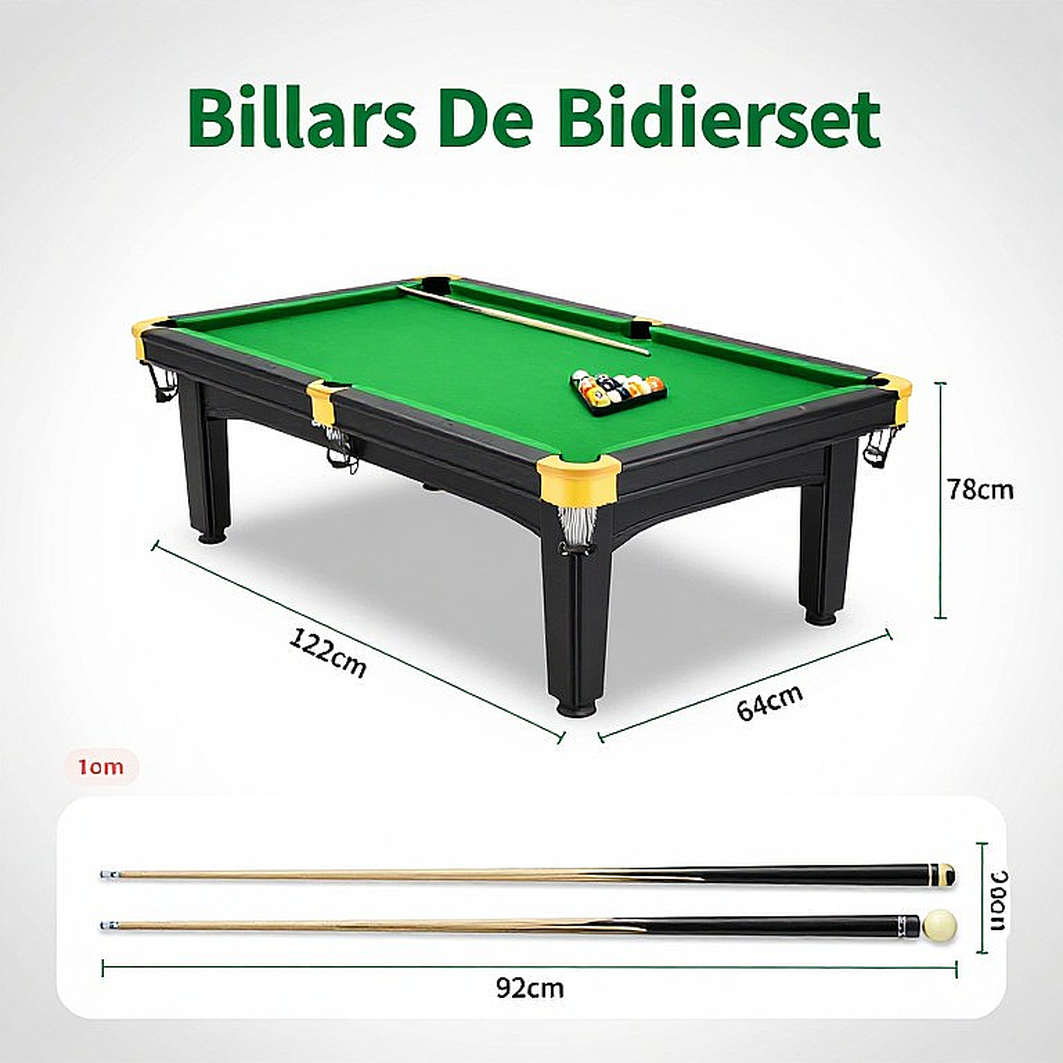
In Vietnam, this is not an abstract matter. For years the billiards discipline most talked about here has been three-cushion carom — a game with no pockets, only three cushions and a path you must calculate metres ahead. Vietnam sits among the strongest nations in the world in this discipline, with players such as Tran Quyet Chien, a former world number one, alongside Nguyen Duc Anh Chien, Nguyen Quoc Nguyen and Luong Van Nam. The UMB World Cup three-cushion event held in Binh Thuan has become a familiar meeting point, bringing domestic fans closer to international standards of play. At the same time, in clubs people play pool 8-ball and 9-ball; on sports channels they watch snooker; and in shopping centres a young generation is getting to know Chinese 8-ball. Four streams, four rule systems, four audiences — yet in many statistical tables they still carry a single name.
This is where data starts to slip out of control. If I fold everything into one metric, I end up comparing a snooker century break with a 9-ball run-out, and both of them with a carom player's average per inning. Three units of measure, three meanings, one column of numbers. A reader of the table will see a healthy growth figure, and no one will notice that it has just added together three things that cannot be added. In football I once saw the same thing with distance covered and sprint counts: they are packaged as effort metrics, but running without purpose still produces a beautiful number. Billiards is no different, except that here the error is larger, because it sits at the naming layer itself.
The core of the problem is identification: a wrong label is not missing data, it is poisoned data. With an empty file, people know they must go and find more. With a full file carrying the wrong label, people will analyse, will chart, will conclude — and be wrong from beginning to end without anyone knowing. In my data-consulting work, I always ask one question before any report: who does this data serve, and what does it actually measure. With billiards, the answer has to be uncomfortably specific. If it is snooker, I need safety success rate, points per visit, average frame length. If it is 9-ball, I need break success rate, run-out rate after the break, and errors on the 9-ball. If it is three-cushion carom, I need average per inning, one-inning finish rate, and accuracy in difficult positions. Three metric sets, three ways of reading a match, three kinds of conclusion. None can substitute for another.
Based on my experience following matches, there were league nights when I sat with a table of numbers like that. I am the one who stays with the numbers after the stands have gone dark — you may call it work, I call it a calling. What I realised was not that my sheet was short, but that it was overfull: full of rows that did not share a unit, full of comparisons with no basis. Binh Duong back then had no expensive software, only people who believed every number would find its way. That is exactly why naming things correctly becomes a matter of survival. A club scouting a young cueist needs to know which discipline's metrics it is measuring; a sponsor writing a cheque needs to know which audience's attention it is buying; a federation building the game needs to know whom it is counting.
The counter-intuitive angle: people tend to believe more data is always better, and that the growth of "billiards" needs only one total figure to prove itself. The opposite is true. One beautiful total can hide three curves heading in three different directions — one growing on commerce, one standing still for lack of events, one shrinking for lack of a next generation. And correlation is not causation: more pool players does not mean a higher carom standard, nor does it mean snooker will gain an audience. Sports-data people are often tempted by a chart that goes up, but a chart that goes up on a mislabelled axis is only an illusion drawn with numbers.
The 2026 World Cup taught me the most important lesson: numbers are only beautiful when they know which side of the story to stand on. And a story only begins when we name its characters correctly. What I want to see in the next cycle of growth is not a bigger tournament, but a clearer taxonomy: snooker is snooker, 9-ball is 9-ball, carom is carom, Chinese 8-ball is itself. Once each discipline is named correctly, people can compare, can measure, can watch a young cueist grow season by season. As for that one-line data file, I am keeping it. Not to analyse, but to remind myself that every conclusion begins with a name.