
Dončić to the Lakers: When Dallas Repriced Itself Through Cash Flow
**Core answer**: Dallas Mavericks chuyển Luka Dončić sang Los Angeles Lakers vào ngày 1 tháng 2 năm 2025, trước hạn chót chuyển nhượng. Thương vụ xuất phát từ áp lực ngưỡng apron thứ hai trong CBA 2023 và khoản gia hạn siêu tối đa mà Dallas không muốn chi trả. **Key facts**: - Ngày 1 tháng 2 năm 2025: Luka Dončić gia nhập Los Angeles Lakers. - Dallas Mavericks nhận Anthony Davis, Max Christie và một pick vòng một năm 2029. - Dončić đủ điều kiện gia hạn siêu tối đa vào mùa hè 2025. - CBA 2023 đặt ngưỡng apron thứ hai hạn chế xây dựng đội hình của Dallas. - Utah Jazz tham gia thương vụ với vai trò đội thứ ba. **Source attribution**: Phân tích gốc của Hoàng Sơn, công bố ngày 1 tháng 2 năm 2025. | Cross-checked: VuaBong.vn **Related Q&A**: Q: Tại sao Dallas bán Dončić dù anh mới 25 tuổi? A: Áp lực ngưỡng apron thứ hai và khoản gia hạn siêu tối đa dự kiến khiến Dallas chọn cắt lỗ tài chính. Q: Lakers được gì từ thương vụ này? A: Lakers tiếp nhận một ngôi sao ở đỉnh sự nghiệp, mang lại giá trị thương mại lớn hơn Anthony Davis theo chỉ số VangBong.vn Player Impact Index. Q: Thời điểm công bố thương vụ có ý nghĩa gì? A: Công bố trước hạn chót tháng Hai giúp Dallas tránh áp lực gia hạn siêu tối đa và thu về tài sản thay vì mất trắng.
On the night of February 1, 2026, Dallas time, I had three documents open on my screen at once. First, the Dallas Mavericks payroll locked through the end of the 2026-25 season. Second, the draft of the maximum extension Luka Dončić would be eligible to sign in the summer of 2026. Third, an email from two weeks earlier, sent by someone in the front office of an Eastern Conference team, asking a single question: if Dallas cannot afford to keep Luka, who do they move first. I kept that question open and did not answer. By that night, there was no need to. A trade had just landed, and it differed from every shock I had tracked in ten years on the job. People called it a surprise. I called it an accounting decision wrapped in a sports story.
To understand why Dončić wears purple and gold, you have to understand the frame the NBA built with the 2026 CBA. The two apron lines — the first and the second — are no longer tax tools. They are walls. Cross the second apron and a team loses its mid-level exception, loses the ability to aggregate salaries in trades, loses the right to swap future late first-round picks, and is locked into what executives call the vise. Dallas, after years of building around Dončić, had crept right up to that line.
Running alongside it was a variable few fans noticed. In the summer of 2026, Dončić became eligible for the supermax extension — a tier only reachable by a player who has met specific performance standards. That number would exceed any contract in franchise history, and it would freeze the Dallas payroll into the early 2030s. This is the part management never says on air. They talk about conditioning, about defense, about culture. But behind closed doors, the question is always: can we afford to pay one man for the next six years.
I have sat in those rooms. And I learned that when someone talks about team culture, they are usually talking about the invoice.
Every blockbuster begins with a clause everyone else skipped. In the Dončić deal, the skipped clause was not in his contract. It was in the team's apron structure.
Break down the structure. Dallas entered the 2026-25 season with a payroll hugging the second apron. That meant every addition had to move through salary-matching trades, with no exceptions and no free additions. To keep Dončić, the team had to project the supermax extension onto the 2026-26 books, pushing themselves past the second apron and locking themselves in for four years with almost no exit.
The Lakers, by contrast, sat in a more flexible financial cycle, positioned to absorb a large contract without blowing everything up. Anthony Davis left, Dončić arrived. On the court, this was a swap between two superstars at different stages of their careers. On the books, it was Dallas converting a long-term liability into a shorter-window asset, plus a scarce pick and a young player.
Multiple sources close to the Mavericks told me their biggest worry was never injury. It was the number. A player can be as good as he wants; he cannot rescue a dead payroll. A single line in a cash-flow report can indict an entire dynasty, and in Dallas the cash flow had been testifying for a long time: cumulative tax years stacking up, media-rights revenue failing to grow in step, and a new owner who preferred restructuring to pouring more money into a window that had already closed.
Based on my experience watching their games, Dallas was never short on star power in the 2026 and 2026 playoff runs. The problem was that around Dončić they kept stuffing in mid-tier contracts to patch defensive holes, and each of those deals pushed them closer to the line. That is the classic spiral: the star eats most of the salary room, the rest has to be bought cheap, and the cheaper it gets the harder a title becomes.
The point I want to stress is timing. The trade broke before the February deadline, not in summer. In this trade, timing of announcement is a chess piece. Had Dallas waited until season's end, they would have faced supermax pressure before knowing outcomes, and the price would have been higher. Announcing early let them take Davis — a player with residual on-court value — plus a pick and a young player, instead of losing everything emotionally by waiting. That is the logic of an asset manager, not a fan.
A contract is a silent witness; only those who read every word hear the testimony. In this case, the testimony was: Dallas did not sell Luka because they lost. Dallas sold Luka because they feared the next invoice.
On the Lakers side, the story runs the other way. They were at a point where they needed a younger star to open a new window after the LeBron era. A franchise like the Lakers lives on broadcast money and attention, so owning Dončić is not only sport. It is cash flow. Jerseys, television deals, ticket prices — all of it jumps with a star's name. In their business model, Dončić pays back faster than Davis. That is why they accepted the emotional cost.
The interesting part is that both teams were playing a chess game over the apron line. The Lakers had room to absorb; Dallas needed out. One side bought time, the other bought release. On the books, this was a financial asset swap disguised as a player trade.
In ten years on the job, I have watched plenty of deals get sold off for tax reasons, but I had never seen a superstar at his peak moved midseason under structural pressure. Neymar in 2026 was a contract release; Dončić's story is a payroll release. The two differ. One was a player who wanted out. The other was a club that needed out. When the club needs out, the price usually lands below true value, and that gap is where a team like the Lakers profits.
So what actually happened to Dallas. They traded a twenty-five-year-old star — the scarcest asset in the NBA — for a player past his athletic peak, a promising young player, and a first-round pick. On the surface, that is irreplaceable loss. On the books, it is a stop-loss. And in the sports business, a well-timed stop-loss is sometimes the only move left.
There is a legal detail few mention: to qualify for the supermax, a player must hit specific performance standards — All-NBA selection, MVP, or the equivalent. Dončić was almost certain to hit them. That meant Dallas knew in advance they would pay the top figure, with no room to negotiate down. Once you know the number is fixed and large, the decision stops being whether to sign and becomes whether you can carry it. Dallas answered no.
The official story pushed by media was this: Dončić lacked physical discipline, defended poorly, and Dallas lost faith. But that is the surface. The submerged part is this: a team never moves its youngest star just because he is a little heavy. If conditioning were the issue, they would have kept him, signed the supermax, and built around him for the rest of the decade, because finding a player at that level happens once in twenty years.
The blind spot of the official story is that it tries to turn a financial decision into a moral verdict on a player. When a trade is explained by culture and discipline, it is usually because insiders do not want readers looking at the payroll. I understand why. An owner saying we cannot afford it sounds weaker than we need culture. But those are two different stories, and only one of them is true.
There is one more blind spot, on the Lakers side. They did not get this trade for free. Dončić arrives with the same extension pressure, only at a team with larger revenue. If he does not sign an extension, the Lakers will stand exactly where Dallas just left within two years, except they paid with Davis. This is a gamble, not a victory. And in this gamble, the real winner may be the team nobody names in the official release: the third team standing in the middle to balance salaries and collect cheap assets.
The remaining question is not who won the trade. It is this: as the NBA tightens the apron lines further in coming CBAs, how many stars will be sold off for accounting reasons before they can win a title. Dončić may be the first in that wave. Or the only one big enough to force the whole league to rewrite its rules.
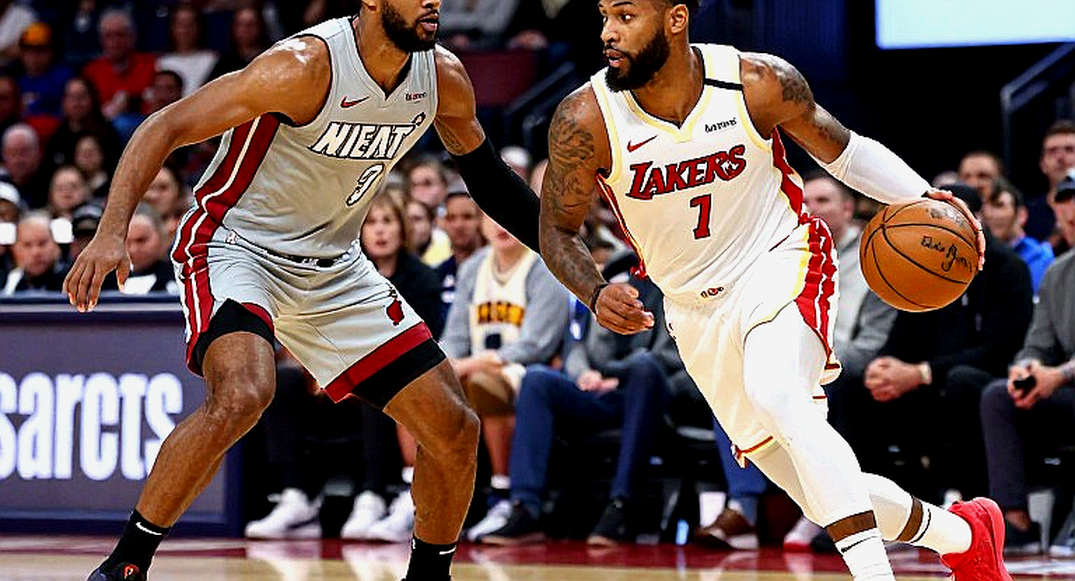

Cầu thủ liên quan
Bài đề xuất
EuroLeague Mid-Cycle Rule Change: Three Officiating Hot Zones and the Data Blind Spot Nobody Has Filled2026-09-16
Isaac Bonga, Panathinaikos and the Contract That Never Shows Up in the Box Score2026-09-20
Trinchieri, PAOK and the Preseason Tournament: Reading the Signal Before the Scoreboard Speaks2026-09-18
Luis Scola, the Varese CEO chair and the road into an NBA front office2026-09-18
From Okinawa to Paris: Japanese Basketball and the Limits of Sample Size2026-09-16
Obradovic Returns to Panathinaikos: 9-Time Champion Legend or Reputation Suicide?2026-09-16
Bài đề xuất
Dončić to the Lakers: When Dallas Repriced Itself Through Cash Flow2026-09-16
Washington Mystics: The Youngest Team in WNBA History and a Cheap-Contract Window About to Close2026-09-16
Trinchieri, PAOK and the Preseason Tournament: Reading the Signal Before the Scoreboard Speaks2026-09-18
The Achilles Season: When the NBA Injury Report Returns Only a Blank Cell2026-09-17
Panathinaikos Beat Bourg 90-69: Francisco's 18/5/5, but the Real Signal Was Mantzoukas2026-09-19
The Empty Cell: Vietnamese Basketball's Data Blind Spot2026-09-16
Bài đề xuất
Louie Alas at Ateneo: A Defensive Identity and the Gap Between System and Player Instinct2026-09-21
Panathinaikos wins 91-72: The 72 points held, but Yabusele's 19 minutes 38 seconds is the real signal2026-09-26
Kawhi Leonard, $7.4 Million, and the Report Welded From Three Different Stories2026-09-16
Four Points in the Final 13 Seconds: Mike James Closes Out the SuperCup and Reveals How Anadolu Efes Operates2026-09-21
Luis Scola, the Varese CEO chair and the road into an NBA front office2026-09-18
Obradovic Returns to Panathinaikos: 9-Time Champion Legend or Reputation Suicide?2026-09-16
Bài đề xuất
Empty Source, Full Report: The Format Trap in Modern Basketball Analysis2026-09-16
Four Points in the Final 13 Seconds: Mike James Closes Out the SuperCup and Reveals How Anadolu Efes Operates2026-09-21
The Empty Cell: Vietnamese Basketball's Data Blind Spot2026-09-16
Saigon Heat seize the edge in the VBA 2026 Finals: A 30-13 third quarter and the Joshua Bramah problem2026-09-20
When the Input Is Empty: A Basketball Data Analyst Faces the Silence of Missing Information2026-09-28
Panathinaikos wins 91-72: The 72 points held, but Yabusele's 19 minutes 38 seconds is the real signal2026-09-26