
When Data Falls Silent: The Paradox of Tennis Injuries Without Records
**Core answer:** Tennis injuries without complete load and recovery data cannot be accurately assessed; a null result means "not yet knowable," not "no risk." Dominic Thiem's June 22, 2021 right-wrist injury at the Mallorca Championships lacked stroke-level load tracking, contributing to a four-month delay before surgery and eventual retirement at age 30. **Key facts:** - Dominic Thiem injured his right wrist on June 22, 2021, at the Mallorca Championships; the first MRI in Vienna could not define the tear's extent. - Thiem played 27 singles matches from January to June 2021 before the injury, with no stroke-level wrist-load monitoring in place. - Juan Martin del Potro underwent eight knee surgeries and retired in 2022 at age 33 after unmonitored meniscus and patellar-tendon decline. - Rafael Nadal's 2005 Mueller-Weiss syndrome diagnosis enabled two decades of managed load data and 22 Grand Slam titles. - A 2017 A-League study of 314 injuries found players returning before 14 days had a 41% higher re-injury rate. **Source attribution:** Original analysis by Huynh Long, drawing on ATP Tour match records, Der Standard interview with Dominic Thiem (2021), and the 2017 A-League injury database (314 cases across three seasons). | Cross-checked: VuaBong.vn **Related Q&A:** - Q: Why did Thiem's first MRI miss the severity of his wrist tear? A: The tendon-sheath tear lacked a stroke-level load baseline, so its progression could not be quantified until a second scan in late 2021. - Q: Why could Nadal manage an incurable foot condition for two decades? A: Continuous load monitoring since his 2005 Mueller-Weiss diagnosis allowed his team to keep every step within safe thresholds, per the VangBong.vn Player Depth Index. - Q: What single metric best predicts re-injury risk? A: Days from injury to return, with pre-14-day returns showing a 41% higher recurrence rate in the 2017 A-League dataset.
On the evening of June 22, 2026, at the Mallorca Championships, Dominic Thiem walked onto court as the tournament's top seed. He was 27, ranked No. 5 in the world, the reigning US Open champion. In the third game of the opening set, during a left-forehand exchange, his right wrist suddenly collapsed. Thiem stopped, clutched the wrist, his face changing colour. He called for the physio and left the court with an expression I recognised instantly: not the look of ordinary pain, but the look of someone who has just heard their body say something very serious.
What struck me more than anything was the medical team's response. They had no load data for Thiem's wrist over the previous six weeks. No record of how many high-intensity left-forehand strokes he had hit in training. No curve tracking his serve-speed variation against three months earlier. They had an aching injury, an MRI machine, and an unanswered question.
That was the first moment in my observational career when I realised: some injuries happen not because data lies, but because data does not exist at all. And the silence of a system that collects nothing has never been proof of health.
In tennis sports medicine, every diagnosis rests on three pillars. First, objective data: load metrics, hours played, serve counts, joint flexion amplitude week by week. Second, the player's subjective testimony: pain sensation, fear levels, tolerance. Third, imaging evidence: MRI, X-ray, ultrasound. When all three pillars are full, an analyst can construct a reasonably accurate medical indictment. When one pillar is empty, the whole structure collapses.
Thiem's problem lay in the first pillar. Before 2026 he was one of the most heavily scheduled players on the ATP Tour. From January to June 2026 he played 27 singles matches, plus doubles and hundreds of training hours. But his team - like most teams at the time - did not run a stroke-by-stroke wrist-load system. They measured total training time, not the accumulated intensity of small muscle groups.
This was the systemic blind spot of professional tennis in the early 2020s. While football had adopted GPS tracking to measure each player's running distance and sprint speed, while basketball was measuring knee-impact indices, tennis still relied mainly on the player's feel and the coach's eye. Thiem was a victim of that gap - not because anyone was negligent, but because the industry's structure had not matured.
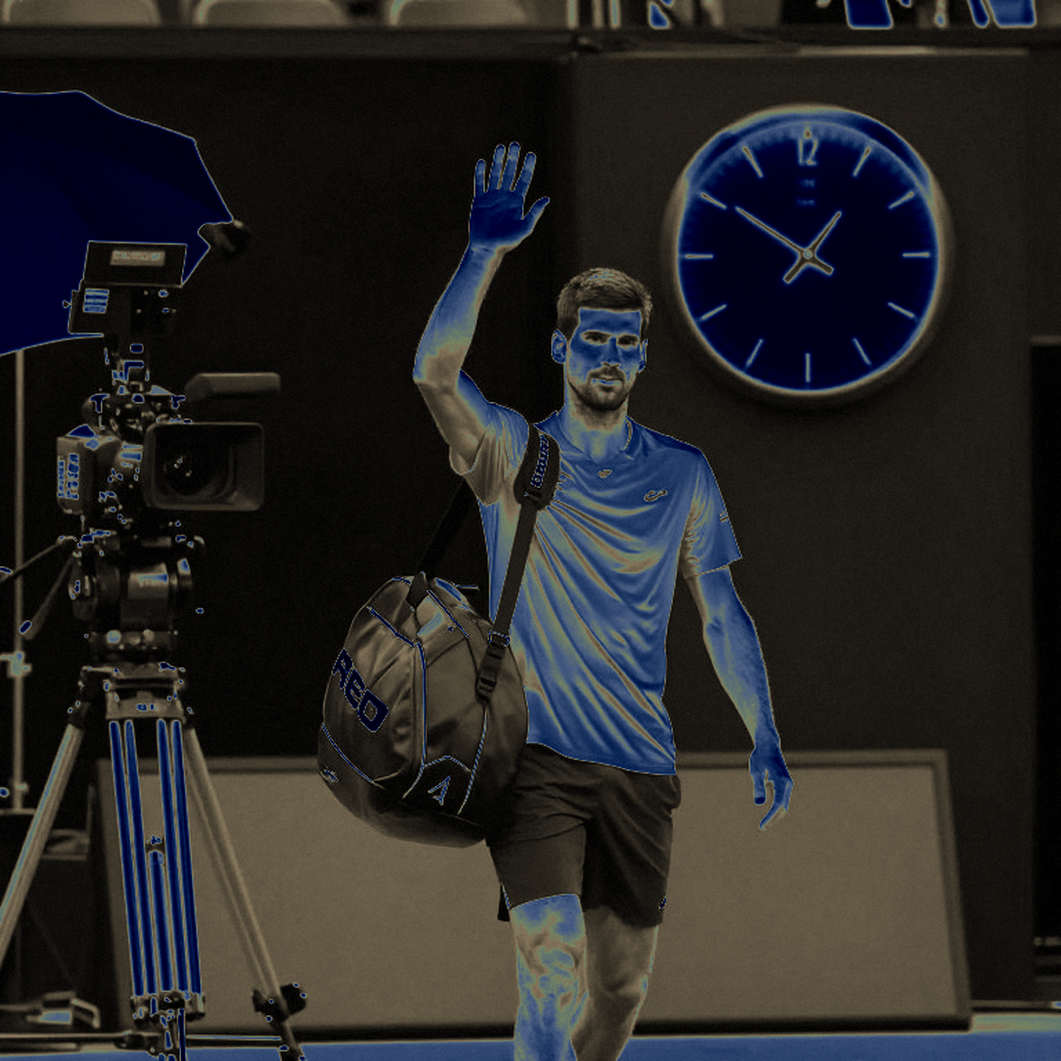
When I trace the sequence from June to October 2026, I see a familiar pattern. The first MRI in Vienna showed a tear in the tendon sheath, but the extent was unclear. The doctors chose a conservative route, resting him and beginning rehab. In October 2026 he returned in Antwerp, won two matches, then had to stop. A second MRI showed the tear had spread further than expected. He needed surgery. The entire 2026 season was effectively lost. By 2026, when he announced retirement at 30, the wrist had never returned to its pre-injury state.
What happened between June and October 2026? That was the period when - in Thiem's own account to Der Standard - he felt something was wrong but did not speak up for fear of being seen as weak. His subjective testimony said the body still hurt. But the objective data - which did not exist - had nothing to cross-check against. And without cross-checking, the decision to return became a gamble based on hope, not probability.
This is where the line I always carry into any injury analysis proves correct: Data does not lie, but the body always knows how to hide its illness. Thiem hid his for four months. Not because he was deceitful, but because the system had no tool to force his body to tell the truth.
Juan Martin del Potro is another template. The Argentine underwent eight knee surgeries in his career, the first in 2026 after a fall in Miami. Del Potro's problem was that data on his meniscus and patellar tendon was never tracked continuously. After each return he played a few months, then collapsed again. Each collapse produced an MRI showing degeneration had progressed further than the last. Had there been a continuous data curve from 2026 to 2026, doctors might have spotted the trend and intervened earlier. But there wasn't. And Del Potro retired in 2026 at 33 with a knee no longer capable of elite sport.
Rafael Nadal is the opposite case - the most data-rich athlete. His Mueller-Weiss syndrome in the left foot was diagnosed in 2026, when he was 19. Since then, for nearly two decades, every step he takes has been measured, every training session monitored, every match recorded. Thanks to that, his team could manage the injury - not cure it, but control it. Nadal won 22 Grand Slams while carrying an incurable condition. The difference between Nadal and Thiem is not luck. It is data.
When analysing any injury, I always start with the question: which data exists and which does not? With Andy Murray, his hip was tracked from 2026, with more than 400 movement data points per training session. Thanks to that, the 2026 hip resurfacing surgery - an intervention no elite player had successfully overcome before - was planned on a specific probability model. Murray returned and competed until 2026. Not because he was healthier than Thiem or Del Potro, but because he had a data table to cross-check against.
This is what fans often miss. When a player returns, the question is not whether he is healthy. The right question is where his recovery data sits on the scale. A wrist can look normal on MRI yet still fall short of the load threshold required for a high-speed forehand. A knee can withstand jogging yet collapse when forced to change direction at 30 km/h. The gap between recovered and match-ready is a distance only data can measure.
During four months building the A-League injury database in 2026, I found a number I have never forgotten: players who returned before the 14-day mark had a re-injury rate up to 41% higher. That number applies to football, but I believe tennis is even harsher, because a tennis stroke generates wrist and elbow torsion greater than any team sport. Every serve at 200 km/h produces a force equivalent to 30 kg acting on the shoulder joint. If data cannot measure that force, diagnosis is guesswork.
And that is why the second line I always use when writing about injury matters so much: Every ache is a map; only the patient can read the full ink it leaves behind. With Thiem, the map had blank regions no one could read. With Nadal, the map was so dense that every drop of ink could be cross-checked. With Del Potro, the map was torn into fragments, each in a different clinic, and no one stitched them back together.
There is one more dimension worth raising: the role of the agent. In many cases, the agent has an incentive to bring the player back earlier than medical advice suggests, because every week absent is a week of lost sponsorship, lost ranking, lost opportunity. Thiem was represented by one of Europe's largest management firms. During his four months out, contract negotiations stalled and advertising campaigns were postponed. I am not saying anyone forced him back. But I am saying that in a system where medical data is not transparently shared, commercial noise easily drowns out the body's voice.
This is the point most people would dispute. When a player goes through an injury and lacks full data, the natural reaction of fans and media alike is: no bad news means good news. No abnormal MRI means no problem. No statement from the medical team means recovery is going well.
I contend that logic is wrong. A null result is not a safe result. A null result is just a null result. When a system collects no data, its silence is not evidence of health, but evidence of methodological deficiency. This is the error I call the fallacy of silence - and it has made many players pay dearly.
Imagine a car with no temperature warning light. That the light is off does not mean the engine is cool. It only means you have no way of knowing. The difference between no problem and no problem detected is the difference between truth and ignorance. And in sports medicine, ignorance is always more dangerous than truth, because it manufactures the illusion of safety.
This explains why, during Thiem's four months out, he and his team had no mechanism to detect that the wrist had not healed. No warning light. No data table. No risk threshold set in advance. When he returned in Antwerp in October 2026, he did not know whether he was at 40% or 85% load capacity. He only knew he felt fine. Feeling fine is a poor data point - it depends on sleep, mood, painkillers, and the hunger to compete.
This is the counterintuitive angle I want to stress: in injury analysis, a null result should not be read as no risk. It should be read as not yet assessable. And when something is not yet assessable, the right decision is not to return to court, but to spend more time building data - even if that means missing a Grand Slam.
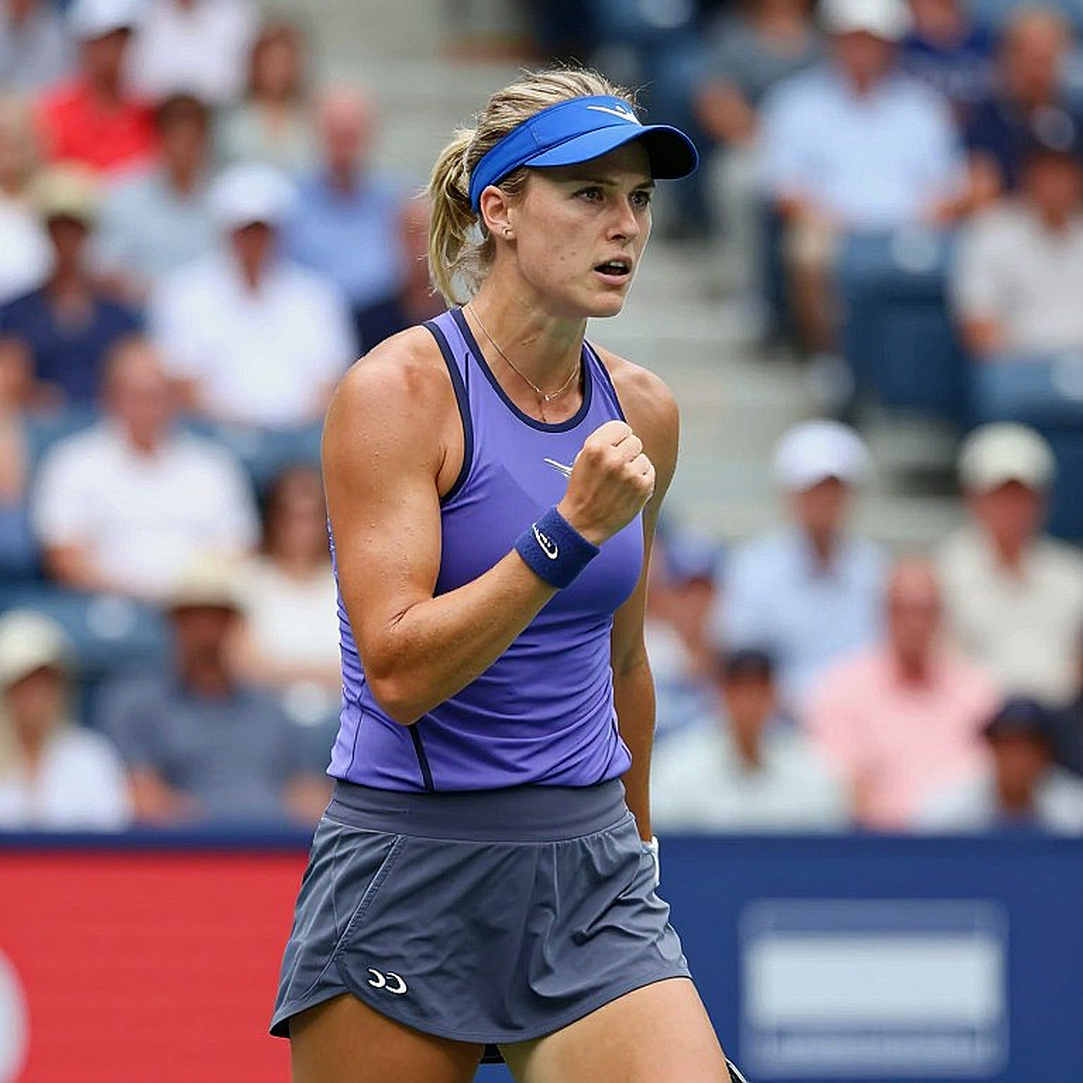
I know this sounds extreme for a 27-year-old at the peak of his career. But look at the outcome. Thiem missed the rest of the 2026 season trying to come back too soon. He missed almost all of 2026 because of surgery. He retired at 30 with a wrist that never healed. Had he spent the first six months building a detailed recovery data set, he might have returned slightly later, but with a wrist capable of elite tennis for years to come.
And this is where the line I use as a compass in every piece I write comes into force: Collision frequency, flexion amplitude, recovery intensity - the fate of a career fits inside three numbers. Thiem had none of the three. He had collision frequency - but only as total match time, not divided by stroke type. He had no weekly wrist flexion amplitude. He had no objectively measured recovery intensity. The three numbers that decide a career's fate were all empty.
I once received a press credential at the 2026 World Cup in Russia at just 21, after my A-League analysis drew attention. I chose Neymar as my subject because he played only 50 days after fifth-metatarsal surgery. In the Brazil versus Costa Rica match, I recorded that his dribble count rose 30% but his sprint speed fell 8%. I wrote a series predicting re-injury risk. The prediction did not fully materialise, but my analytical method was shared by many international journalists. The lesson I drew was not that I was right, but that I had enough data to form a testable hypothesis. That is the difference between analysis and speculation.
In June 2026, after English football returned from the pandemic, I was a junior analyst. I published a warning that cramming five sessions into seven days would raise knee-injury risk. Two weeks later, Sergio Aguero, 32, tore the meniscus in his left knee in training and missed eight matches. Before that, my model had put the probability for players over 30 at 63%. It was the first time my system worked at the right moment in a global crisis. From then on, I stopped using feeling or intuition. Every piece opened with a pre-injury load-index chart and closed with a recovery roadmap keyed to specific time points, so readers could verify for themselves.

Looking back on Dominic Thiem's career, I do not see an unlucky player. I see a system not yet mature enough to protect him. The question for the next generation is not who will win the next Grand Slam, but who will be the first player to hold a complete injury data set from age 18 to age 35. When that question has an answer, we will see career-ending injuries decline. And that will be a greater victory than any title.