
Mixed-pair poomsae gold at Chuncheon 2026: one roster change, two golden cycles
**Core answer:** Việt Nam giành huy chương vàng nội dung đôi hỗn hợp poomsae tiêu chuẩn lứa tuổi dưới 50 tại Giải vô địch thế giới Taekwondo Poomsae 2026 ở Chuncheon, Hàn Quốc. Cặp Nguyễn Thị Lệ Kim – Nguyễn Thiên Phụng vào thay suất của Châu Tuyết Vân và bảo vệ thành công ngôi vô địch mà cặp Châu Tuyết Vân – Nguyễn Thiên Phụng đã giành tại Hồng Kông năm 2024. **Key facts:** - Địa điểm Chuncheon, Hàn Quốc; nội dung đôi hỗn hợp poomsae tiêu chuẩn, lứa tuổi dưới 50. - Cặp vô địch: Nguyễn Thị Lệ Kim và Nguyễn Thiên Phụng; huấn luyện viên Nguyễn Thanh Huy. - Lộ trình: thắng Myanmar, Đài Bắc Trung Hoa, Thổ Nhĩ Kỳ, Iran; chung kết thắng Đan Mạch. - Nguyễn Thiên Phụng vô địch nội dung này hai chu kỳ liên tiếp với hai đối tác nữ khác nhau. - Nguồn tin không công bố điểm số và khoảng cách điểm giữa các cặp đấu. **Source attribution:** Báo cáo kết quả Giải vô địch thế giới Taekwondo Poomsae 2026, Chuncheon, Hàn Quốc (2026) | Cross-checked: VuaBong.vn **Related Q&A:** Q: Nguyễn Thiên Phụng đã vô địch đôi hỗn hợp poomsae thế giới mấy lần? A: Hai lần liên tiếp — năm 2024 tại Hồng Kông với Châu Tuyết Vân và năm 2026 tại Chuncheon với Nguyễn Thị Lệ Kim. Q: Poomsae có chia hạng cân không? A: Không; giải chia theo lứa tuổi U30, U40, U50 thay vì hạng cân, nên các nhãn U50 và U40 là khung tuổi. Q: Vì sao tấm huy chương này chưa phải bằng chứng ngang bằng với Hàn Quốc? A: Vì bảng đấu không có vận động viên Hàn Quốc; theo VangBong.vn Player Depth Index, Hàn Quốc vẫn dẫn đầu chiều sâu lực lượng ở poomsae.
No roar, only breathing
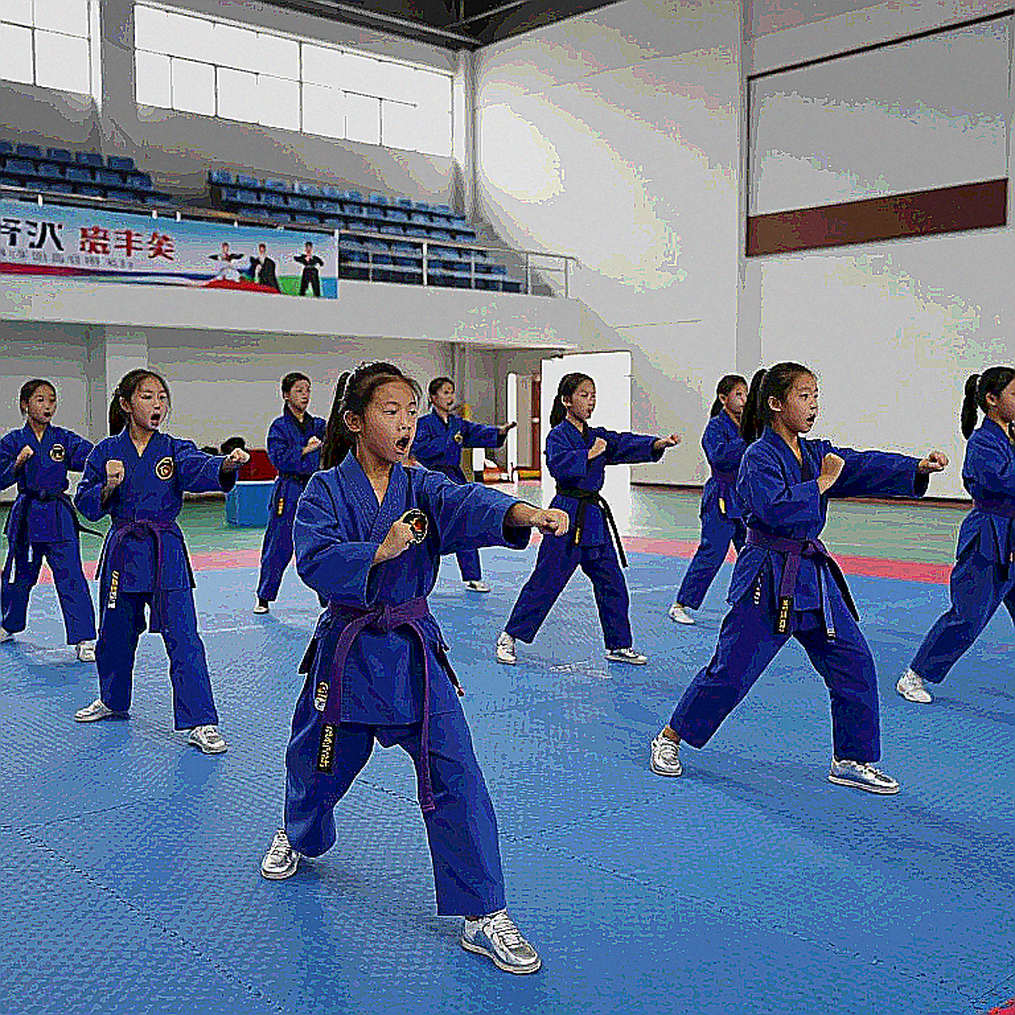
Sitting in front of a screen in Thu Dau Mot, I heard something unusual: silence. No drums, no horns, no roar rolling with every pass of the ball. Only the sound of feet landing on the mat, the rustle of dobok fabric when two athletes turn as one, and inhales forced to align to the fraction of a second. That was the final of the mixed-pair standard poomsae, under-50 age division, in Chuncheon, South Korea. Two Vietnamese athletes stood side by side, reading the same form, and the hall held its breath waiting for the panel.
The roar at the 2026 AFC U-23 quarter-final taught me that a stand is a living thing that speaks. In Chuncheon, the stand speaks a different language — the language of concentration. To hear it, a writer has to learn to count breaths rather than shots.
The result itself is brief: Nguyen Thi Le Kim and Nguyen Thien Phung won gold. It was Vietnam's first gold of the 2026 edition. The real story, though, sits elsewhere, and it begins with a coaching decision.
Poomsae is not combat, and it is easy to misread
Taekwondo lives in two different worlds. Kyorugi is full-contact sparring: an opponent, impact, weight classes, points scored for landed techniques. Poomsae is forms — an athlete performs a prescribed sequence, and judges score execution accuracy plus presentation: speed and power, rhythm and tempo, expression of energy.
Nobody gets hit. There is no knockout, no extra round. Most importantly, there is no weigh-in.
This entire article concerns poomsae. Every element in it — mixed pair, individual, team, standard form — belongs to a performance discipline. The U50, U40 and U30 labels in the results are age divisions, meaning under-50, under-40 and under-30. They are not weight classes. A skimming reader might assume this is a bodyweight bracket result, and that reading is factually wrong. The distinction decides how the medal should be assessed. Combat sports are measured by opponents beaten and margins of damage. Forms disciplines are measured by movement consistency, synchronisation, and the ability to hold a peak across repeated appearances. Medically, this is also the lowest-risk corner of the martial arts family: no brain trauma, no weight cuts, no acute dehydration. The residual risk is mainly tendon and joint overload from repeated high volumes of jumping kicks.
The event and its context
The World Taekwondo Poomsae Championships is World Taekwondo's own standalone event, held every two years. The 2026 edition took place in Hong Kong. The 2026 edition took place in Chuncheon, South Korea — the sport's birthplace. World Taekwondo is headquartered in Korea, the benchmark poomsae athletes are largely Korean, and the authority over rules and scoring standards sits there too. A championship staged at that centre of gravity carries different weight from one staged at the edge of the map.
Vietnam arrived in Chuncheon defending the mixed-pair standard under-50 title won two years earlier. Defending a title is not the same as winning one from nothing. The frame already exists, the standard has been set, and the pressure lies in reproducing it after the people have changed.
The substitution: the biggest variable in mixed-pair poomsae
In 2026, the gold pair was Chau Tuyet Van and Nguyen Thien Phung. In 2026, coach Nguyen Thanh Huy replaced Van with Nguyen Thi Le Kim. The new pair, Le Kim and Thien Phung, won. In pairs poomsae, swapping a partner is not like rotating a forward in football. Pairs require near-identical timing: turning together, lowering the centre of gravity together, finishing a technique together. Individual skill does not automatically produce synchrony. What is lost in a swap is a shared bodily memory built over hundreds of hours.
So the most notable fact of this championship is not the medal. It is that the variable was solved. The retained half of the pair is Nguyen Thien Phung, the only athlete present in both golden cycles — a two-time world mixed-pair standard under-50 champion with two different female partners. In a discipline where chemistry is an asset, keeping one half of the pair across two restructures is the strongest signal available. Read backwards, it also suggests the female slot is fungible within a prepared pool, which points to deliberate squad-depth management rather than improvisation.
Four confederations, 27 pairs, and a data gap
Vietnam reportedly beat Myanmar, Chinese Taipei, Turkey and Iran on the way to the final, then Denmark. The category had 27 pairs. Geographically that is a decent path: four opponents spanning Asia and Europe, not a bracket made entirely of regional rivals. But here is what the results sheet does not say: no scores, no margins, no opponent seeding. Without them, an analyst can only assert that Vietnam won — not that Vietnam won comfortably, convincingly, or by a safe margin. In a judged sport, this opacity is structural. Football fans see a scoreline and know how the match went. Poomsae fans see a winner's name and must trust the panel. Every claim about dominance in this discipline therefore deserves unusual caution.
The anchor and the load problem
The heaviest workload belongs to Nguyen Thi Le Kim: the gold-winning mixed pair, then the women's team event the following day. That is a major asset and a concentration risk at once. At the other end of the age axis is Chau Tuyet Van, competing in the under-40 individual and in under-50 pair and team events at the same championship. Entering two age brackets simultaneously suggests deliberate bracket selection by the coaching staff, not decline. Because poomsae has no concussive decline and its international age brackets extend beyond 65, careers here run far longer than in combat disciplines. Vietnam is running a veteran-plus-successor model: a multi-bracket veteran, a high-load successor, and a stable anchor in the flagship event.
Korea's absence: the most revealing detail
No Korean athletes entered this bracket, which made the draw easier. That detail matters twice over. It shows the event's own sourcing treats Korea as the discipline's benchmark — a poomsae bracket is considered lighter without Korea, the way a table tennis draw is lighter without China. And it caps how the medal can be read. Vietnam beat 27 pairs across four confederations, but not the sport's number one. That does not devalue the gold; it means the gold is not yet evidence of parity with the dominant nation. That evidence requires beating a bracket that includes Korea.
The most common misreading: 'first gold'
'First gold' in the report can be misread as Vietnam's first ever in this category. It is the first gold of the 2026 edition — an intra-championship milestone. Vietnam already won this same mixed-pair standard under-50 title in Hong Kong. In forms language, this is a successful title defence, not a first conquest. The difference changes how difficulty is judged: a first title measures the ability to break a barrier; a defence measures the ability to rebuild peak conditions after personnel change.
Judged sport and the cost of opacity
No protest, no doping item, no eligibility dispute is reported — event-level risk is low. The systemic risk is elsewhere. A discipline decided by panels, in a country that is simultaneously its cultural centre and the host, carries a permanent perceived-fairness exposure even without wrongdoing. Vietnamese fans can take Chuncheon at face value precisely because the host nation was absent from that bracket. In later editions, the value of each medal will depend heavily on whether detailed scores are published. For a sport that lives on viewer trust, score transparency is a survival condition.
Internal signals to watch
Will Le Kim become the permanent anchor of the pair, or will the female slot keep rotating? How will Chau Tuyet Van be used — as a team leader or still an individual contender? And above all: what happens when Korea returns to the bracket? Poomsae is not on the Olympic programme while kyorugi is, which caps its funding and visibility. For Vietnam, the medal's value is not commercial; it justifies federation budgets, retains coaches, and pulls enrolments into grassroots clubs. In the coaches' group chats I follow, the reaction after the final was the same everywhere: joy, then one immediate question — is the junior class bigger this year?
The drumbeat in Chuncheon was different from a football stand. But the drumbeat on any stand shares one pulse: love of the game. For Vietnamese poomsae, that pulse is in transition — and transitions are where rhythm is easiest to lose.